
'/%3E%3C/svg%3E)
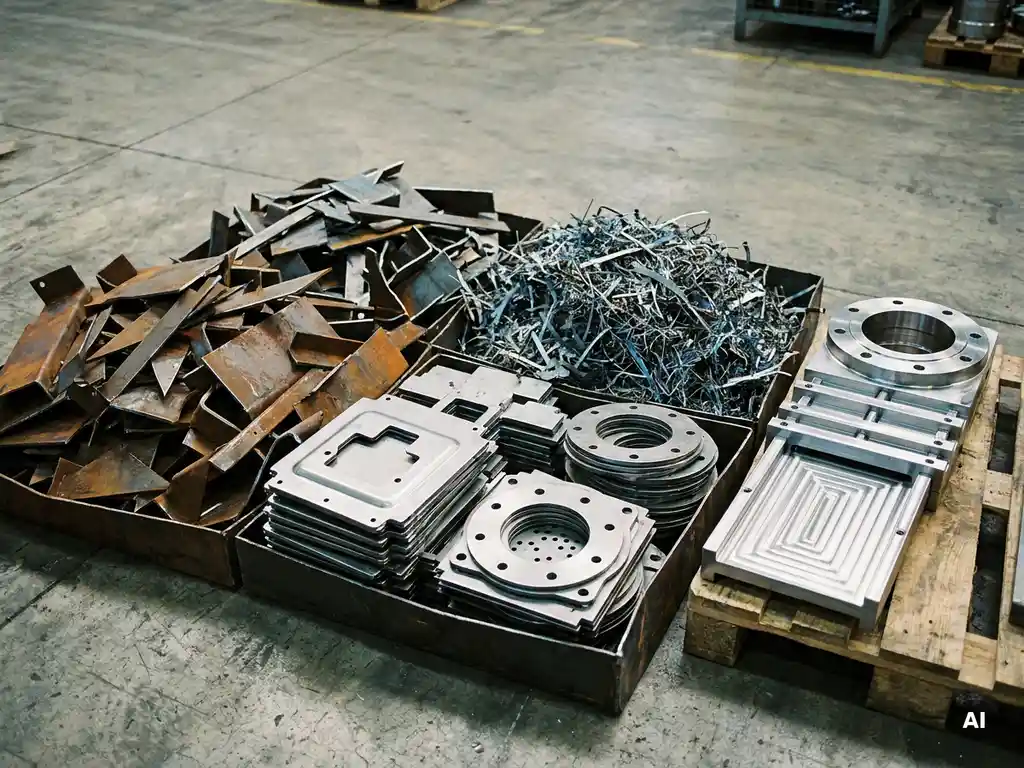
Scrap quality variation makes clean steel production harder because inconsistent raw material introduces unpredictable levels of tramp elements, non-metallic inclusions, and reactive compounds into the melt. When scrap composition shifts from heat to heat, steelmakers lose the process stability they need to hit tight cleanliness targets. The sections below address the most pressing questions around scrap steel quality and what steelworks can do to maintain clean steel standards in 2026.
How does scrap composition inconsistency affect molten steel cleanliness?
Scrap composition inconsistency affects molten steel cleanliness by introducing variable quantities of tramp elements, oxide-forming compounds, and surface contaminants that generate non-metallic inclusions during melting and refining. Because the exact chemistry of each scrap charge differs, the quantity and type of inclusions formed in the melt cannot be reliably predicted or controlled through a fixed process recipe.
Non-metallic inclusions are one of the primary enemies of steel cleanliness. They form when oxygen, sulfur, or other reactive elements combine with alloying additions or refractory materials during steelmaking. When scrap quality varies significantly, the oxygen load entering the furnace fluctuates, which in turn affects how much deoxidation work is needed in the ladle. Inconsistent deoxidation leaves residual oxygen in the melt, which then reacts with aluminum or silicon additions to form alumina or silica clusters. These clusters can clog submerged entry nozzles, cause surface defects in rolled or cast products, and ultimately compromise the mechanical properties of the finished steel.
Beyond inclusions, scrap composition inconsistency also affects slag chemistry. Fluctuating levels of phosphorus, sulfur, and copper in the scrap charge make it more difficult to maintain a stable, reactive ladle slag that can absorb inclusions efficiently. The result is a refining process that is constantly chasing a moving target rather than operating within a well-defined window.
What contaminants in steel scrap are hardest to remove during refining?
The contaminants in steel scrap that are hardest to remove during refining are tramp elements such as copper, tin, antimony, and arsenic. Unlike sulfur or phosphorus, which can be reduced through slag treatment, these metallic residuals cannot be oxidized and removed under normal steelmaking conditions. Once they enter the melt, they remain in the steel.
Copper is particularly problematic because it accumulates with each recycling cycle. It originates from electrical wiring, motors, and coated components that are not fully separated during scrap processing. At elevated temperatures, copper can segregate to grain boundaries and cause surface cracking during hot rolling, a defect known as hot shortness. As global steel recycling rates increase, the average copper content of available scrap tends to rise, which puts additional pressure on steelmakers targeting high-quality grades.
Tin and antimony present similar challenges. Both elements have very low solubility in solid steel and tend to segregate at grain boundaries, reducing ductility and toughness in the final product. Arsenic, though typically present in smaller quantities, has comparable effects. None of these elements can be removed through conventional ladle metallurgy processes, which means the only effective control point is upstream, in scrap selection and sorting.
Nitrogen and hydrogen, while not tramp metals, are also difficult to manage when scrap quality varies. Moisture-bearing or organically contaminated scrap releases hydrogen during melting, increasing the risk of porosity and hydrogen-induced cracking in sensitive steel grades. Managing these dissolved gases requires additional degassing treatment, which adds cost and process time.
Why is scrap quality control more difficult in 2026 than in previous years?
Scrap quality control is more difficult in 2026 than in previous years because the global supply of clean, well-sorted scrap is tighter, while demand from electric arc furnace-based steelmakers continues to grow. This imbalance pushes steelworks to accept lower-grade or more heterogeneous scrap to maintain production volumes, which directly increases the risk of steel scrap contamination.
Several factors have converged to create this situation. The rapid expansion of electric arc furnace capacity in Europe and the United States has increased competition for prime scrap grades. At the same time, geopolitical disruptions have affected scrap trade flows, limiting access to historically reliable sources. Steelworks that previously relied on consistent, well-characterized scrap from specific suppliers now face a more fragmented and unpredictable supply landscape.
Scrap sorting and processing technology has improved, but the diversity of end-of-life products entering the scrap stream has also grown. Modern consumer goods, vehicles, and industrial equipment contain increasingly complex material combinations, including coatings, polymers, and mixed-metal assemblies that are more difficult to separate cleanly. This means that even well-processed scrap may carry higher levels of tramp elements or surface contaminants than equivalent grades from a decade ago.
Regulatory pressure adds another layer of complexity. Environmental restrictions on certain processing methods in some regions have reduced the availability of specific scrap preparation techniques, affecting the cleanliness and consistency of the material reaching steelworks. For steelmakers targeting clean steel production, these combined pressures make maintaining stable input quality a genuine operational challenge in 2026.
How do slide gate systems help manage the effects of scrap-related inclusions?
Slide gate systems help manage the effects of scrap-related inclusions by providing precise, controllable flow regulation during teeming, which reduces turbulence and limits the opportunity for reoxidation and inclusion formation at the ladle outlet. A well-designed slide gate also supports inert-gas shielding, which helps protect the steel stream from atmospheric oxygen during transfer to the tundish or mold.
When scrap quality varies, the melt may carry a higher inclusion load than anticipated. In this situation, the ability to control flow rate accurately becomes especially important. Uncontrolled or turbulent flow can break up and disperse inclusion clusters throughout the steel, making them harder to float out and more likely to be captured in the solidified product. A slide gate system that delivers smooth, consistent flow helps minimize this risk by keeping the steel stream stable from the start of teeming to the end.
Inert-gas shielding at the ladle is another relevant capability. Contact between the molten steel stream and atmospheric oxygen causes reoxidation, which generates new inclusions even after careful ladle treatment. Systems designed to support inert-gas shielding reduce this contact, helping to preserve the cleanliness achieved during refining. This is particularly valuable when scrap-related inclusions have already placed the steel close to the upper limit of acceptable cleanliness.
The reliability and containment design of the slide gate also matter from a safety and process continuity perspective. A system that performs consistently heat after heat, even under the varying thermal and chemical conditions that come with inconsistent scrap, gives the melt shop a stable foundation on which to build its quality management approach. You can review technical documentation to understand the design principles behind modern ladle slide gate systems in more detail.
What process adjustments can steelmakers make to compensate for inconsistent scrap?
Steelmakers can compensate for inconsistent scrap quality by strengthening upstream scrap analysis, adjusting ladle metallurgy treatment to match the actual melt chemistry, and applying more rigorous inclusion management practices during secondary metallurgy and casting. No single adjustment is sufficient on its own; effective compensation requires a coordinated approach across the full process chain.
Upstream scrap assessment and charge planning
The first line of defense is better information. Investing in more thorough incoming scrap analysis, including portable spectrometry or X-ray fluorescence screening at the scrap yard, allows melt shop operators to characterize each batch before it enters the furnace. With this data, charge planning can be adjusted to blend high-tramp and low-tramp scrap in proportions that keep the overall heat chemistry within acceptable limits. This does not eliminate variability, but it reduces the magnitude of heat-to-heat swings.
Scrap sourcing strategy is equally relevant. Where possible, establishing longer-term supply agreements with processors who apply consistent sorting and preparation standards reduces the risk of receiving highly contaminated material. Diversifying the supplier base also helps, since dependence on a single source creates vulnerability when that source experiences quality problems.
Secondary metallurgy and ladle treatment
When scrap-related variation reaches the ladle, secondary metallurgy is the main tool for restoring cleanliness. Adjusting deoxidation practice based on measured oxygen activity, rather than a fixed recipe, allows the metallurgist to apply the right quantity of deoxidants for the actual melt condition. This reduces the risk of over-deoxidation, which can itself generate excessive alumina inclusions, as well as under-deoxidation, which leaves reactive oxygen in the steel.
Ladle slag optimization is closely connected. A well-conditioned, highly basic slag with appropriate fluidity absorbs inclusions more effectively and prevents reversion of phosphorus and sulfur into the steel. When scrap chemistry is uncertain, checking and adjusting slag composition after tapping rather than relying on pre-calculated additions gives the operator more control over the refining outcome.
Sufficient stirring time using inert gas is also important. Gentle, controlled stirring promotes inclusion flotation without causing reoxidation through excessive surface turbulence. The duration and intensity of stirring may need to be extended when the scrap charge is known to carry a higher inclusion risk. Protecting the steel during and after ladle treatment, including at the point of teeming, helps ensure that the cleanliness achieved in the ladle is preserved through to the mold.
How KNÖLLINGER FLO-TEC supports clean steel production under variable scrap conditions
Managing metallurgical scrap quality variation is a process-wide challenge, and the ladle slide gate system is one of the components where reliable performance directly supports your cleanliness targets. We design our ladle slide gate systems specifically for demanding clean steel applications, and we build them to perform consistently even when process conditions shift from heat to heat.
- Inert-gas shielding capability: Our GT series systems support flooding with inert gas such as argon, helping to reduce reoxidation at the ladle outlet and protect the cleanliness of the steel stream during teeming.
- Precise flow control: Smooth, stable flow regulation reduces turbulence and limits the dispersion of inclusions during transfer to the tundish or mold.
- Robust construction: Our systems are built to withstand the thermal and chemical variability that comes with inconsistent scrap charges, maintaining reliable containment and safe operation heat after heat.
- Compatibility with patent-free refractory plate formats: Our systems can be adapted to work with a range of plate formats, giving you flexibility in refractory sourcing and reducing dependence on a single supplier.
- Customized solutions: We develop slide gate systems for different ladle sizes and operating requirements, including customer-specific configurations where standard solutions do not fit.
If your melt shop is working to maintain clean steel standards in 2026 despite increasing scrap quality variation, we are ready to discuss how our systems can support your process. Contact us to speak with one of our specialists about your specific application.
Dieser Inhalt wurde mithilfe von KI erstellt und kann Fehler enthalten.