

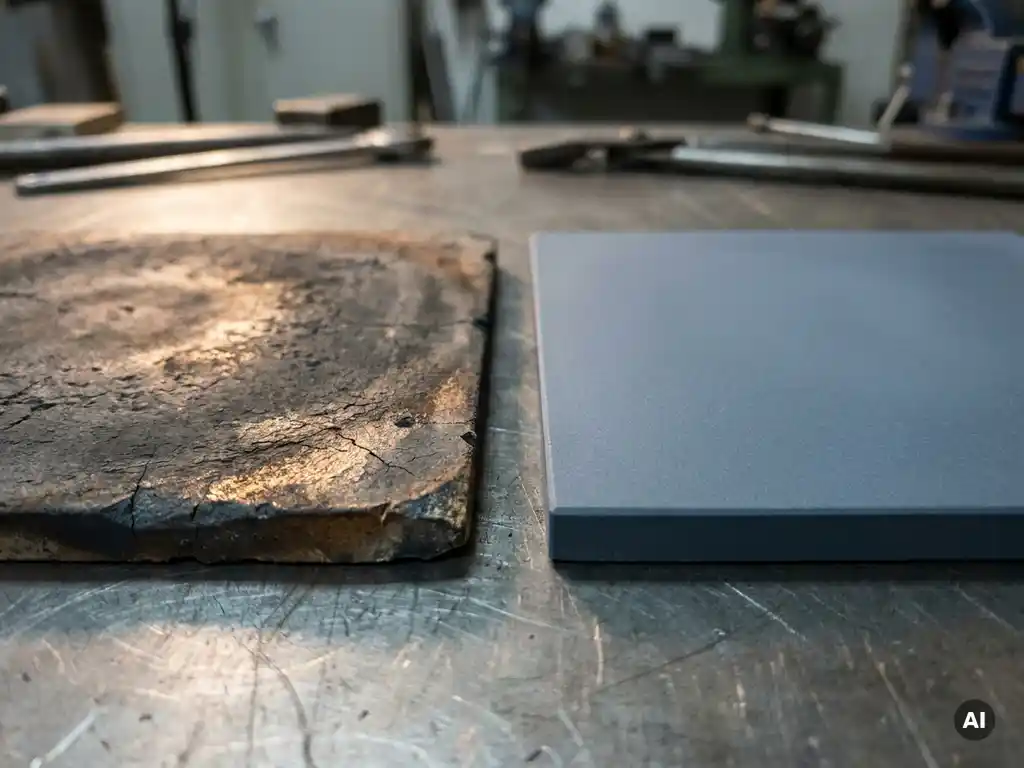
Ladle age directly affects steel cleanliness because refractory wear accumulates with each heat cycle, increasing the risk of non-metallic inclusion generation, gas infiltration, and inconsistent flow control. In high-volume production environments, where ladles cycle through multiple heats per day, even moderate wear progression can measurably degrade the quality of the steel produced. The following questions address the specific mechanisms behind this relationship and what production teams can do about it.
How does refractory wear progress across a ladle’s service life?
Refractory wear in a ladle is not linear; it accelerates as the lining ages. During the first heats of a new campaign, the refractory surface is relatively uniform and chemically stable. As heat cycles accumulate, thermal cycling, slag attack, and mechanical stress from filling and emptying progressively erode the lining, particularly in the high-wear zones around the bottom and the slide gate area.
In the early heats, the refractory absorbs heat and stabilizes. By mid-campaign, the lining has thinned noticeably in critical zones, and micro-cracking begins to develop. In the later heats, these cracks widen, the hot face becomes increasingly irregular, and the risk of localized breakthrough or spalling rises sharply. The rate of wear depends on steel grade, tapping temperature, slag composition, and the quality of the refractory materials used, but the progressive nature of the degradation is consistent across operations.
For production teams managing ladle slide gate systems, understanding where a ladle sits in its campaign is important because the condition of the surrounding refractory directly influences how reliably the gate and nozzle perform.
Why does an older ladle introduce more non-metallic inclusions into steel?
An older ladle introduces more non-metallic inclusions into steel primarily because a worn refractory lining is more prone to erosion, spalling, and chemical interaction with the melt. As the hot face deteriorates, small refractory particles can detach and enter the steel, forming oxide- or silicate-based inclusions that reduce cleanliness and can affect the mechanical properties of the final product.
Beyond direct erosion, a worn lining also becomes more permeable. Micro-cracks and open porosity allow atmospheric oxygen and nitrogen to infiltrate the steel, promoting reoxidation. This is particularly problematic in the final heats of a campaign, when the lining is thinnest and the thermal gradient across it is steepest. Slag line erosion is another contributor; as the slag zone wears unevenly, slag entrapment during tapping becomes more likely, and entrained slag is a significant source of alumina and silica inclusions in clean steel grades.
For steelworks focused on clean steel production, this means ladle age is not just a maintenance variable; it is a direct quality variable that needs to be tracked with the same discipline as melt chemistry.
How does ladle age affect slide gate and nozzle performance?
As a ladle ages through its campaign, the condition of the collector nozzle and the surrounding refractory seat deteriorates, which affects the seating integrity and flow control accuracy of the slide gate system. Worn or eroded nozzle bores alter the flow characteristics of the steel stream, and an irregular seating surface reduces the contact pressure between the gate plates and the nozzle assembly.
Reduced seating integrity creates pathways for air ingress around the gate area, which is one of the most common sources of reoxidation in ladle-to-tundish transfer. Even small gaps in the sealing zone allow oxygen to contact the steel stream, generating alumina clusters and other oxide inclusions that compromise cleanliness. In high-volume operations where casting sequences are long, this effect compounds across multiple heats.
Nozzle clogging also becomes more frequent as ladle age increases. Alumina buildup in a partially worn nozzle bore is harder to manage and more likely to cause sudden flow disruptions. For operations running clean steel grades, these disruptions often require interventions that introduce additional reoxidation risk.
What are the critical heat thresholds for ladle-induced cleanliness risk?
There is no single universal heat threshold that applies to all ladles, because the progression of risk depends on refractory quality, steel grade, operating temperature, and slag practice. However, industry experience consistently shows that cleanliness risk increases significantly in the final third of a ladle’s campaign, when cumulative wear has thinned the hot face to the point where erosion and infiltration rates accelerate.
In practice, many steelworks identify a mid-campaign inspection point, typically after 40 to 60 percent of the planned heats, where the condition of the nozzle zone, the slide gate seat, and the slag line is assessed. If wear in these areas exceeds defined tolerances, the ladle is either relined or reassigned to less demanding steel grades. Waiting until the end of the planned campaign without intermediate assessment is a common source of unplanned quality incidents.
The risk is not only about the total number of heats but also about the intensity of each heat. A ladle used for high-temperature grades or aggressive slag practices will reach critical wear thresholds earlier than one used for standard grades at lower tapping temperatures. Tracking heat count alongside temperature history and slag composition gives a more accurate picture of actual ladle condition.
How can inert gas purging compensate for ladle age effects?
Inert gas purging, typically using argon, helps mitigate some of the cleanliness risks associated with ladle age, but it does not eliminate them. Argon bubbling through the steel bath promotes flotation of non-metallic inclusions toward the slag layer, where they can be absorbed. It also helps homogenize temperature and chemistry, reducing the likelihood of localized cold zones that can promote nozzle clogging.
In the context of ladle age, inert gas purging is most effective as a compensating measure in the mid-to-late campaign heats, when inclusion generation from refractory wear is higher. A well-managed purging practice can partially offset the increased inclusion load from a worn lining by improving the rate at which inclusions are removed before casting begins.
However, purging cannot compensate for structural refractory failure, severe nozzle erosion, or significant air infiltration through worn seating surfaces. These require mechanical intervention. Slide gate systems designed to support inert gas shielding around the gate and nozzle area offer an additional layer of protection by reducing the exposure of the steel stream to atmospheric oxygen during transfer, a meaningful advantage when the ladle’s own refractory can no longer provide the same level of protection it did at the start of the campaign.
When should a ladle be retired or relined to protect steel cleanliness?
A ladle should be retired from service or relined when measurable wear in the critical zones, the nozzle seat, the slide gate area, the bottom, and the slag line, reaches the limits defined in the plant’s quality management system. Waiting for a visible failure or an unplanned quality incident is always more costly than acting on condition-based assessment data.
The decision to reline or retire should be driven by a combination of factors:
- Nozzle bore diameter: An eroded nozzle bore that exceeds the tolerance range affects flow control and increases the risk of inclusion generation at the gate.
- Hot face thickness: When lining thickness in high-wear zones falls below the plant’s defined minimum, the risk of breakthrough and refractory contamination rises sharply.
- Seating surface condition: Irregularities in the slide gate seating zone that cannot be corrected by maintenance should trigger relining before the next heat.
- Inclusion data from previous heats: A pattern of increasing inclusion counts in the steel produced from a specific ladle is a direct signal that ladle condition is affecting cleanliness.
- Visual inspection findings: Spalling, cracking, or erosion channels visible during turnaround inspection are reliable indicators that the campaign should not continue.
For steelworks producing demanding grades, it is worth establishing a formal ladle tracking system that records heat count, temperature history, inspection findings, and inclusion data for each individual ladle. This makes retirement and relining decisions systematic rather than reactive, and it provides the data needed to optimize campaign length without compromising steel quality.
How KNÖLLINGER FLO-TEC supports clean steel production across the ladle campaign
Managing the interaction between ladle age and steel cleanliness requires reliable flow control equipment that performs consistently from the first heat of a campaign to the last. We develop and manufacture ladle slide gate systems specifically for this environment, with a focus on clean steel production, operational safety, and flexibility across different ladle sizes and operating conditions.
Here is what our systems are designed to support:
- Inert gas shielding capability: Our GT series slide gate systems can be flooded with inert gas such as argon, helping to reduce contact between the steel stream and atmospheric oxygen during transfer, particularly relevant in the later heats of a campaign when refractory-based protection is reduced.
- Robust construction for demanding conditions: Our systems are built to maintain reliable seating integrity and flow control even as the surrounding refractory wears, reducing the risk of air infiltration through the gate area.
- Compatibility with patent-free plate formats: Our slide gate systems can be adapted to work with different refractory plate formats, giving your operation flexibility in sourcing and reducing dependence on a single supplier.
- Customized solutions: We develop systems for specific ladle sizes and operational requirements, so the slide gate is matched to your actual production conditions rather than a generic standard.
If ladle age is affecting steel cleanliness in your operation and you want to discuss how slide gate system design can contribute to a solution, contact our team directly. You can also explore our product range or download technical documentation to review our systems in more detail.
Dieser Inhalt wurde mithilfe von KI erstellt und kann Fehler enthalten.