

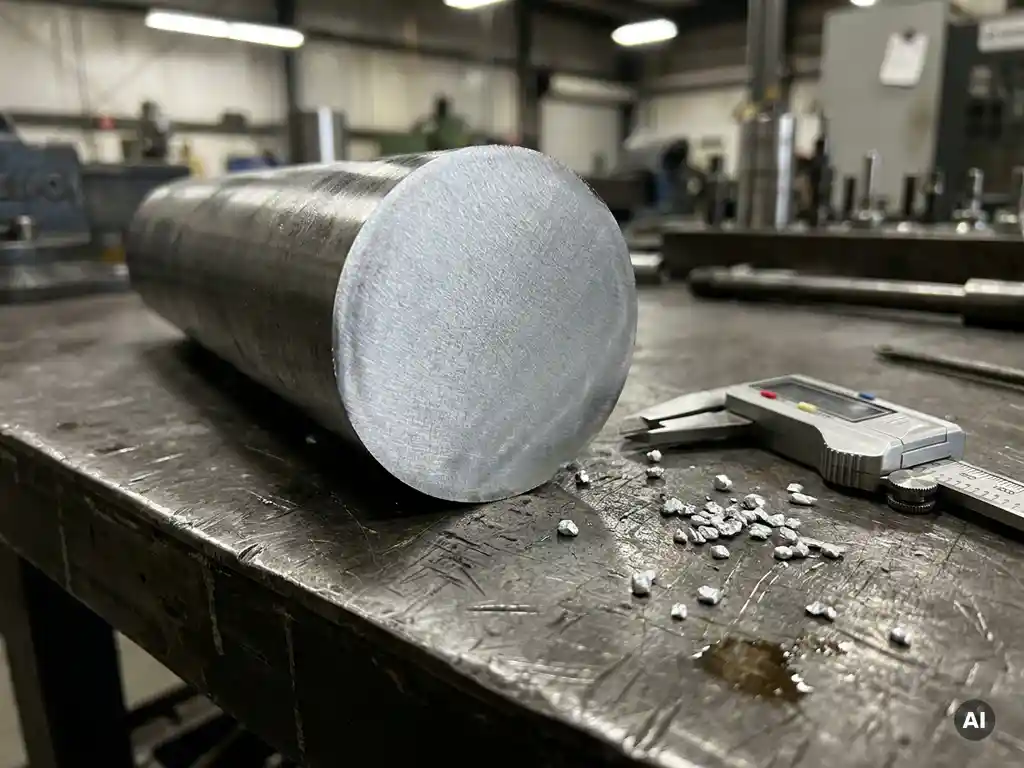
Aluminum content in steel directly affects grain size by forming aluminum nitride (AlN) particles that pin grain boundaries and prevent coarsening during heat treatment. This grain refinement mechanism improves both tensile strength and toughness, making aluminum one of the most important alloying and deoxidation elements in modern steelmaking. The sections below answer the most common technical questions about how aluminum influences steel microstructure and mechanical behavior.
How does aluminum refine grain size in steel?
Aluminum refines grain size in steel by reacting with nitrogen to form aluminum nitride (AlN) precipitates. These fine particles disperse throughout the steel matrix and physically obstruct grain boundary movement during austenitizing heat treatment, keeping the austenite grains small. Smaller austenite grains translate directly into a finer final microstructure after cooling, which benefits mechanical performance.
This grain refinement mechanism is well established in metallurgical practice. When aluminum is present at appropriate levels, typically in the range considered standard for aluminum-killed steels, the AlN precipitates are fine enough and numerous enough to be effective grain boundary pinners. The result is a steel with a more uniform, fine-grained microstructure compared to steels without aluminum or with insufficient aluminum content.
Fine grain size matters because it distributes deformation more evenly across the material. A steel with refined grains resists crack initiation more effectively, performs better at lower temperatures, and shows improved toughness alongside acceptable strength levels. For steelmakers targeting demanding structural, automotive, or pressure vessel applications, aluminum grain refinement is a reliable and cost-effective metallurgical tool.
What role does aluminum play in steel deoxidation?
Aluminum is one of the most effective deoxidizers used in steelmaking. It reacts strongly with dissolved oxygen in liquid steel to form aluminum oxide (Al2O3) inclusions, which reduces the oxygen content in the melt and helps produce cleaner, more homogeneous steel. This process is central to producing what the industry refers to as aluminum-killed or fully killed steel.
The deoxidation reaction happens rapidly when aluminum is added to the ladle after tapping. Oxygen that would otherwise remain dissolved in the steel and cause porosity, surface defects, or brittle oxide inclusions in the final product is instead bound into solid alumina particles. These particles can then be removed through flotation, slag absorption, or filtration during secondary metallurgy and casting.
Effective aluminum deoxidation is a foundational step in clean steel production. Steels with high residual oxygen content are prone to reoxidation during transfer and casting, which generates new inclusions and undermines the work done in the ladle. Controlling aluminum additions precisely, and protecting the steel from atmospheric oxygen during casting, are both essential to realizing the full benefit of aluminum deoxidation.
How does aluminum content affect tensile strength and toughness?
Aluminum content influences tensile strength and toughness primarily through its grain refinement effect. Finer grains increase yield strength and tensile strength modestly while significantly improving toughness and impact resistance, particularly at low temperatures. This combination makes aluminum-treated steels attractive for applications where both strength and ductility are required.
The relationship between grain size and mechanical properties follows well-understood metallurgical principles. A finer grain structure provides more grain boundary area per unit volume, which impedes dislocation movement and raises yield strength. At the same time, fine grains reduce the stress concentration at individual grain boundaries, which lowers the risk of brittle fracture and improves the ductile-to-brittle transition temperature.
Beyond grain refinement, aluminum also contributes to solid-solution strengthening in small amounts, though this effect is secondary to its role as a grain refiner and deoxidizer. For steelmakers producing high-quality structural steels, pipeline steels, or cold-forming grades, maintaining the correct aluminum content is an important part of achieving the target mechanical property profile consistently across heats.
What happens when aluminum levels are too high or too low in steel?
Both insufficient and excessive aluminum content cause problems in steel. Too little aluminum means incomplete deoxidation, leaving residual oxygen that promotes reoxidation, porosity, and harmful oxide inclusions. Too much aluminum leads to an excess of coarse alumina inclusions, potential nozzle clogging during casting, and, in some cases, undesirable grain coarsening if AlN precipitates become too large.
Consequences of insufficient aluminum
When aluminum levels fall below what is needed for complete deoxidation, the steel retains dissolved oxygen. This oxygen reacts with other elements during solidification, producing CO gas bubbles, iron oxide inclusions, or complex silicate inclusions depending on the steel composition. The result is a steel with variable cleanliness, inconsistent mechanical properties, and higher rejection rates in quality-critical applications.
Consequences of excessive aluminum
High aluminum content generates large quantities of alumina inclusions that can cluster and partially block submerged entry nozzles during continuous casting, disrupting flow control and creating casting instability. Excessive aluminum can also lead to abnormal grain growth in certain heat treatment conditions, which reverses the grain refinement benefit and reduces toughness. Maintaining aluminum within the target window for each steel grade is therefore a precision task, not simply a matter of adding more.
How does aluminum interact with nitrogen and other alloying elements?
Aluminum’s interaction with nitrogen is central to its grain refinement function. Aluminum and nitrogen combine to form aluminum nitride precipitates, which are the primary mechanism by which aluminum controls grain growth. This interaction means that both aluminum and nitrogen content must be managed together: the ratio between them determines how effective the grain refinement will be.
If nitrogen is too low relative to aluminum, insufficient AlN forms and the grain refinement effect is reduced. If nitrogen is too high, free nitrogen can remain in the steel and contribute to strain aging or other embrittlement effects in certain applications. Steelmakers targeting specific grain size outcomes often monitor and control both elements in combination rather than treating them independently.
Aluminum also interacts with other alloying elements. In steels containing niobium or vanadium, aluminum works alongside these microalloying elements to provide complementary grain refinement and precipitation strengthening effects. In steels with significant titanium content, the competition between titanium and aluminum for available nitrogen must be considered, since titanium nitride (TiN) is thermodynamically more stable than AlN at higher temperatures and will form preferentially.
How is aluminum content controlled during steelmaking and casting?
Aluminum content is controlled through precise additions during secondary metallurgy, primarily in the ladle after tapping. Steelmakers use wire injection or bulk additions of aluminum in various forms, with the quantity calculated based on the target aluminum level, the initial oxygen content of the melt, and the expected losses during subsequent processing. Sampling and analysis at multiple stages allow adjustments before casting begins.
Maintaining the target aluminum level through to the mold is more challenging than achieving it in the ladle. Reoxidation during transfer, ladle-to-tundish pouring, and tundish-to-mold flow can consume aluminum and generate new inclusions. Protecting the steel from contact with atmospheric oxygen at each transfer point is therefore a critical part of aluminum management in clean steel production.
Inert gas shielding during casting is one of the most effective ways to limit reoxidation and preserve the aluminum content and cleanliness achieved during secondary metallurgy. Ladle slide gate systems that support inert gas application around the steel stream help reduce oxygen pickup between the ladle and the tundish. Consistent, well-controlled flow through the slide gate also reduces turbulence, which lowers the risk of slag entrainment and secondary oxidation during casting. You can find more technical background in the product documentation available from equipment suppliers specializing in ladle flow control.
How KNÖLLINGER FLO-TEC supports aluminum-killed clean steel production
We at KNÖLLINGER FLO-TEC design ladle slide gate systems specifically for steelworks that prioritize steel cleanliness and consistent casting conditions. For aluminum-killed and clean steel grades, where protecting aluminum content and minimizing reoxidation are important process goals, our systems offer several relevant capabilities:
- Inert gas shielding support: Our GT slide gate series is designed to be flooded with inert gas such as argon, helping to reduce contact between the steel stream and atmospheric oxygen during casting.
- Reliable flow control: Consistent, controllable flow through the slide gate reduces turbulence and helps maintain stable casting conditions that protect steel cleanliness.
- Enclosed design for operational safety: The system’s construction helps contain steel in the event of a leak, supporting safe operation in demanding steelmaking environments.
- Compatibility with patent-free refractory plate formats: Our systems can be adapted to work with different plate formats, giving steelworks flexibility in their refractory sourcing and reducing dependence on a single supplier.
- Customized solutions: We develop slide gate systems to match specific ladle sizes and operating requirements, whether for continuous casting or ingot casting applications.
If you produce aluminum-killed or clean steel grades and want to discuss how ladle flow control can support your quality objectives, contact our team to speak with a specialist about your specific requirements.
Dieser Inhalt wurde mithilfe von KI erstellt und kann Fehler enthalten.