

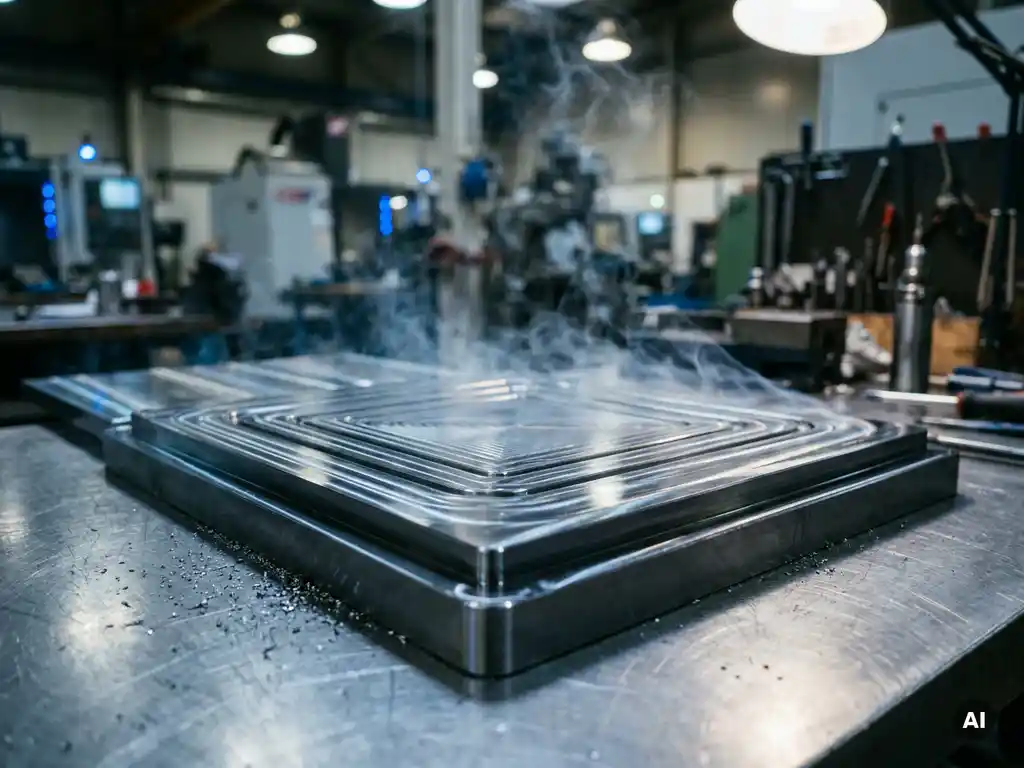
Electromagnetic stirring plays a central role in clean steel production by promoting the flotation and removal of non-metallic inclusions from molten steel. By generating controlled electromagnetic forces that set the melt in motion, EMS helps homogenize temperature and chemical composition, reduces segregation, and supports the conditions needed to produce high-quality, low-inclusion steel. The sections below address the most common technical questions about electromagnetic stirring and where it fits within the broader clean steel process.
How does electromagnetic stirring improve steel cleanliness?
Electromagnetic stirring improves steel cleanliness by inducing controlled fluid motion in the molten steel without any physical contact. This motion promotes the collision and agglomeration of small non-metallic inclusions into larger particles, which then rise more efficiently to the slag layer and are absorbed. The result is a measurable reduction in inclusion content and a more uniform melt composition.
The physics behind this are straightforward. Small inclusions in a static or weakly moving melt have limited opportunity to collide and grow. Once EMS creates a consistent flow pattern, inclusion particles encounter one another more frequently, cluster together, and become large enough to float out of the steel. At the same time, electromagnetic stirring smooths out temperature gradients that can otherwise cause localized solidification and trap inclusions within the solidifying shell.
For steel producers targeting tighter cleanliness specifications, EMS also supports better alloy homogeneity. A well-stirred melt distributes alloying elements more evenly, which reduces the risk of compositional variation across a heat and contributes to consistent mechanical properties in the final product.
Where in the steelmaking process is EMS applied?
Electromagnetic stirring is applied at several distinct stages of steelmaking, most commonly in the ladle during secondary metallurgy, in the mold during continuous casting, and in the strand below the mold. Each application targets a different aspect of steel quality, and many modern steelworks use EMS at more than one stage.
Ladle electromagnetic stirring
Ladle EMS, often called LF-EMS or ladle stirring, is used during secondary metallurgy to homogenize temperature and chemistry after alloying and refining. It accelerates inclusion flotation and helps prepare the melt for casting with a consistent composition. Effective ladle metallurgy at this stage directly supports ladle flow control during subsequent casting operations.
Mold and strand electromagnetic stirring
Mold EMS (M-EMS) is applied within the continuous casting mold to control the flow of liquid steel, reduce surface defects, and promote a clean solidification front. Strand EMS (S-EMS) and final EMS (F-EMS) are applied further down the strand to break up columnar dendrites, promote equiaxed grain formation, and reduce centerline segregation. Together, these applications address both surface and internal quality.
What types of inclusions does electromagnetic stirring remove?
Electromagnetic stirring is most effective at removing oxide inclusions, particularly alumina clusters and silicate particles, as well as sulfide inclusions under the right slag and temperature conditions. These are the inclusion types that most commonly compromise fatigue strength, surface quality, and machinability in demanding steel grades.
The removal mechanism depends on inclusion size and density relative to the steel melt. EMS promotes the collision and growth of fine oxide particles that would otherwise remain suspended in the melt for extended periods. Once these particles grow beyond a critical size, buoyancy forces carry them toward the slag interface, where they are absorbed if the slag has been properly conditioned.
It is worth noting that EMS does not eliminate all inclusion types with equal efficiency. Very fine inclusions below a few micrometers in diameter are difficult to remove regardless of stirring intensity, and inclusions that form during or after casting, such as reoxidation products, are not addressed by stirring alone. This is why EMS works best as part of a broader clean steel strategy that also controls reoxidation during tapping and casting.
How does EMS compare to other clean steel technologies?
Electromagnetic stirring is one of several tools available for improving steel cleanliness, and it complements rather than replaces other methods. Compared to argon purging through porous plugs or lances, EMS offers more precise flow control and avoids the risk of introducing gas-related turbulence near the steel surface. Compared to vacuum degassing, EMS addresses inclusion removal and homogeneity rather than dissolved gas content.
In practice, the most effective clean steel programs combine multiple technologies. Vacuum degassing reduces hydrogen and nitrogen to low levels. Argon stirring and inert-gas shielding during casting limit reoxidation. EMS then addresses the fluid dynamics needed to float out remaining inclusions and maintain compositional uniformity. Controlling reoxidation during the transfer of steel from ladle to mold is particularly important, since any oxygen pickup at that stage can generate new inclusions that EMS alone cannot remove.
For steelworks focused on reducing reoxidation during casting, the performance of the slide gate system and the quality of inert-gas shielding at the ladle outlet are directly relevant to how much work EMS needs to do downstream.
What steel grades benefit most from electromagnetic stirring?
Steel grades with strict inclusion cleanliness requirements benefit most from electromagnetic stirring. These include bearing steels, tool steels, tire cord and spring steels, high-strength structural steels, and pipeline grades subject to demanding mechanical testing. In each case, non-metallic inclusions represent a primary quality risk that EMS helps to mitigate.
Bearing steels are perhaps the best-known application. Fatigue life in rolling contact applications is highly sensitive to oxide inclusions, and the industry has developed detailed cleanliness standards that EMS-equipped plants are better positioned to meet. Similarly, wire rod grades for tire cord and high-tension spring applications require extremely low inclusion counts to avoid wire breakage during drawing.
Grades produced for the automotive, energy, and aerospace sectors increasingly specify cleanliness levels that make EMS not merely useful but a practical requirement for competitive production. As quality standards in these sectors continue to tighten, the value of reliable stirring at multiple process stages grows accordingly.
What are the limitations of electromagnetic stirring in clean steel production?
Electromagnetic stirring has real limitations that steel producers need to account for when designing a clean steel strategy. It does not prevent reoxidation, cannot remove inclusions that form after the stirring stage, and has limited effectiveness against very fine particles below a certain size threshold. Stirring intensity must also be carefully controlled to avoid surface turbulence that can entrap slag or cause reoxidation at the melt surface.
Over-stirring is a recognized risk. Excessive electromagnetic force can create an open eye at the melt surface in the ladle, exposing liquid steel to the atmosphere and generating new oxide inclusions that offset the cleanliness gains from stirring. Optimizing stirring parameters for each grade and ladle geometry is therefore an ongoing process engineering task rather than a one-time setup.
EMS also does not address the quality of the steel after it leaves the stirring zone. Inclusions generated during tapping, during transfer between vessels, or as a result of reoxidation at the ladle shroud or slide gate represent a separate challenge. This is why the complete process chain, from secondary metallurgy through to the mold, needs to be managed as an integrated system. Stirring is one important element, but the cleanliness of the final product depends equally on how well reoxidation is controlled at every transfer point.
How KNÖLLINGER FLO-TEC supports clean steel production
We design and manufacture ladle slide gate systems specifically for steelworks that take clean steel production seriously. Our systems address one of the most critical reoxidation risks in the casting process: the transfer of molten steel from ladle to tundish. Here is what we bring to that challenge:
- Inert-gas shielding capability: Our GT series slide gate systems can be flooded with inert gas such as argon to reduce contact between molten steel and atmospheric oxygen during casting, supporting your overall inclusion management strategy.
- Robust, reliable containment: The enclosed design helps contain steel in the event of a leak, supporting operational safety in demanding production environments.
- Flexibility across plate formats: Our systems are compatible with a range of patent-free refractory plate formats, reducing your dependence on a single refractory supplier and giving you more control over your supply chain.
- Customized solutions: We develop slide gate systems tailored to your ladle sizes and operating requirements, whether for continuous casting or ingot casting applications.
- Proven industry relationships: We maintain close working relationships with more than 70 percent of German steel producers and serve customers across the international steel industry.
If you want to discuss how our slide gate systems can support your clean steel program, we are ready to help. Contact our team to start a technical conversation, or download our product documentation to review our system specifications in detail.
Dieser Inhalt wurde mithilfe von KI erstellt und kann Fehler enthalten.