
'/%3E%3C/svg%3E)
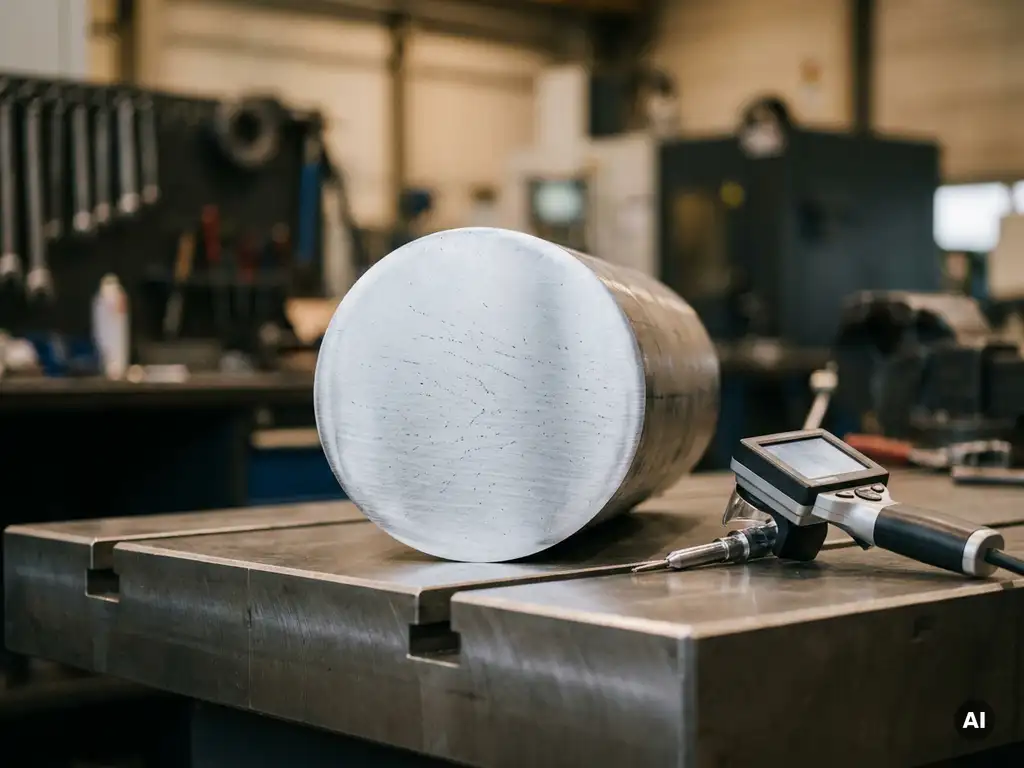
Steel cleanliness and inclusion rating are related but distinct measures of steel quality. Steel cleanliness describes the overall level of non-metallic inclusions present in a steel sample, while inclusion rating is a standardized method for classifying those inclusions by type, size, and distribution. Understanding both metrics together gives steelmakers a more complete picture of whether a heat meets the demands of its intended application.
The distinction matters most in high-performance applications where even small deviations in inclusion characteristics can affect fatigue life, surface quality, or mechanical properties. The sections below address the most common questions metallurgists and quality engineers ask when working with these two concepts.
How does steel cleanliness actually get measured?
Steel cleanliness is measured by quantifying the total content of non-metallic inclusions in a steel sample. Common methods include optical microscopy on polished cross-sections, automated inclusion analysis using scanning electron microscopy with energy-dispersive spectroscopy (SEM-EDS), and ultrasonic testing for larger defects. Each method captures different aspects of the inclusion population.
Optical microscopy gives a rapid visual assessment and is widely used in production environments. Automated SEM-EDS systems go further by identifying the chemical composition of individual inclusions, allowing metallurgists to distinguish between, for example, alumina clusters and calcium aluminosilicates. Ultrasonic testing is particularly useful for detecting macro-inclusions in finished products such as bar or wire rod.
Total oxygen content is also used as an indirect indicator of steel cleanliness. Because most non-metallic inclusions contain oxygen, a lower total oxygen reading generally correlates with cleaner steel. However, total oxygen alone does not reveal how inclusions are distributed or what form they take, which is why it is used alongside direct inspection methods rather than as a standalone measure.
What is inclusion rating and how is it determined?
Inclusion rating is a standardized classification of non-metallic inclusions in steel based on their type, morphology, and severity. The most widely applied standards are ASTM E45 and ISO 4967, both of which categorize inclusions into defined groups and assign severity ratings by comparing microscopic images of a polished steel sample against reference charts.
Under these standards, inclusions are typically grouped into four main categories:
- Type A (sulfide-type): elongated inclusions with a plastic morphology, typically manganese sulfide
- Type B (alumina-type): angular inclusions arranged in stringers
- Type C (silicate-type): elongated glassy inclusions
- Type D (globular oxide-type): randomly distributed, rounded inclusions
Each type is rated on a thin and heavy series depending on inclusion size. The metallurgist examines multiple fields of view and records the worst-case rating observed. The result is a set of ratings, such as A1, B0, C0, D1, that describes the inclusion population in a standardized, reproducible format that can be compared across heats, plants, and suppliers.
Why can a steel have a good inclusion rating but poor cleanliness?
A steel can achieve a favorable inclusion rating while still having poor overall cleanliness because inclusion rating focuses on the worst observed field in a limited sample area, whereas cleanliness reflects the total inclusion burden across a much larger volume of material. The two measures capture different dimensions of the same problem.
Inclusion rating is inherently a worst-case snapshot. If the sample examined happens to avoid a cluster of macro-inclusions or a reoxidation event that affected only part of the heat, the rating will look acceptable even though the bulk material contains significant defect populations. Automated cleanliness analysis, by contrast, scans larger areas and builds a statistical picture of the entire inclusion distribution.
Reoxidation during casting is a typical cause of this discrepancy. A heat may be well refined in the ladle, producing a low total oxygen content and a clean metallurgical profile, but if the steel contacts air during transfer or casting, fresh oxide inclusions form in localized zones. These zones may or may not appear in the standard rating sample. For ladle flow control systems, managing reoxidation at the point of casting is therefore just as important as ladle metallurgy upstream.
Which industries and applications require both metrics?
Industries that subject steel to high cyclic loads, tight dimensional tolerances, or demanding surface quality standards typically specify both steel cleanliness and inclusion rating. Bearing steel, automotive components, aerospace structural parts, high-pressure tubing, and wire rod for cold drawing are among the most demanding applications.
In bearing steel production, for example, both the total inclusion content and the distribution of hard oxide inclusions are critical because even a single large alumina cluster can initiate fatigue failure under rolling contact. Automotive safety components such as steering knuckles and suspension parts face similar requirements. In these sectors, meeting an inclusion rating specification is necessary but not sufficient on its own.
Energy sector applications, including seamless tubes for oil and gas service and components for wind turbine gearboxes, also require both metrics. Regulatory and customer specifications in these segments often reference both ASTM E45 ratings and total oxygen or inclusion area fraction limits, ensuring that suppliers demonstrate control over the full inclusion population rather than just the worst-case field.
How does the casting process affect cleanliness and inclusion rating?
The casting process has a direct and significant influence on both steel cleanliness and inclusion rating. Reoxidation, turbulence, and poor flow control during casting can introduce new inclusions or modify existing ones after all ladle metallurgy treatment has been completed. This means that a well-refined heat can still produce steel with poor inclusion characteristics if the casting step is not properly controlled.
Reoxidation is the primary risk. When liquid steel contacts oxygen, whether from air entrainment, oxidized refractories, or moisture, it forms fresh oxide inclusions that were not present in the ladle. These inclusions tend to be fine and numerous, raising total oxygen content and degrading cleanliness. In continuous casting, the tundish and submerged entry nozzle are critical control points because any air ingress at these locations affects the entire cast sequence.
Turbulent flow during casting can also cause existing inclusions to agglomerate into larger clusters, which have a disproportionate effect on inclusion rating. Smooth, controlled flow through the ladle outlet is therefore important not just for productivity but for inclusion management. Inert-gas shielding at the ladle slide gate is one established approach to reducing reoxidation at the point where steel exits the ladle, helping to protect the cleanliness achieved during secondary metallurgy.
The design and condition of the ladle slide gate system itself also play a role. A system that maintains a reliable seal under operating conditions reduces the risk of air ingress, while one that allows even minor leakage can introduce enough oxygen to affect both cleanliness and inclusion rating in the final product.
How KNÖLLINGER FLO-TEC supports clean steel production
We design and manufacture ladle slide gate systems specifically for steelworks that take steel cleanliness and inclusion control seriously. Our systems are built to support the production of clean steel by addressing reoxidation at one of the most critical points in the casting process: the ladle outlet.
Here is what we offer:
- Inert-gas shielding capability: Our GT-series slide gates can be flooded with inert gas such as argon, helping to reduce contact between the steel stream and atmospheric oxygen during casting.
- Reliable containment: The enclosed design supports operational safety by helping to contain steel in the event of a leak, reducing unplanned interruptions that can affect cast quality.
- Compatibility with patent-free refractory plate formats: Our systems can accommodate different plate formats through suitable adaptations, giving you flexibility in your refractory supply chain without compromising performance.
- Customized solutions: We develop slide gate systems tailored to your ladle sizes and operating requirements, following our „keep it simple“ engineering principle.
- ISO 9001:2015 certified quality management: Our production and development processes meet internationally recognized quality standards.
If you produce bearing steel, automotive grades, energy sector tubes, or any application where both inclusion rating and steel cleanliness are specified, we are glad to discuss how our systems can support your process. Contact our team to talk through your requirements.
Dieser Inhalt wurde mithilfe von KI erstellt und kann Fehler enthalten.