
'/%3E%3C/svg%3E)
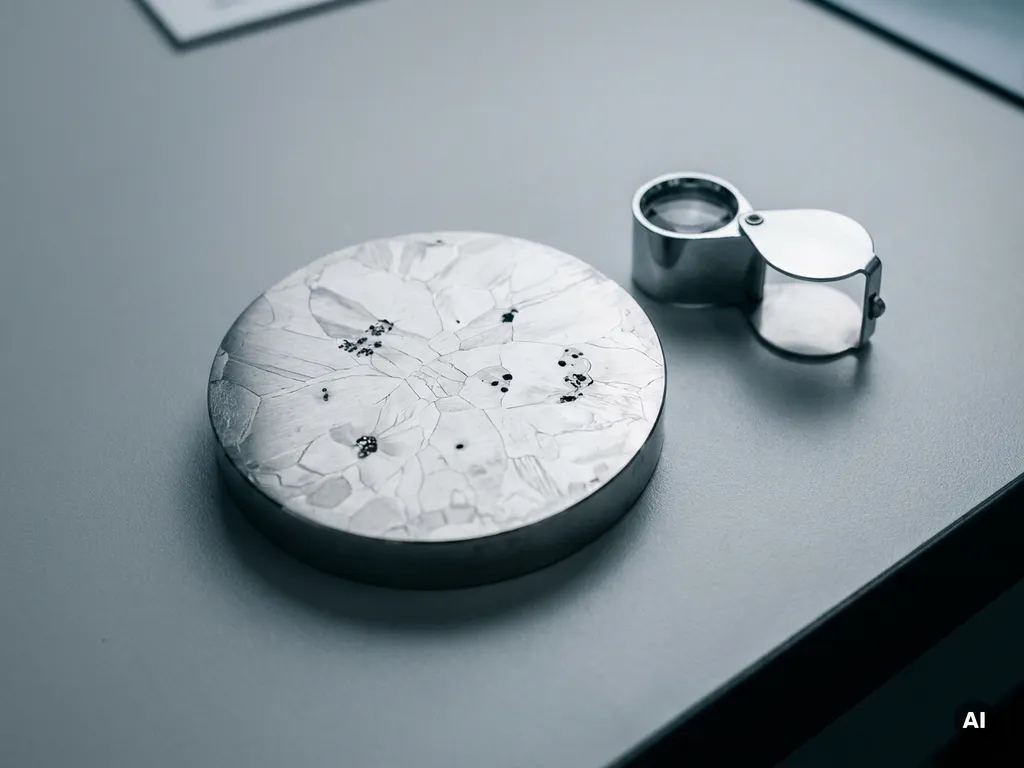
Macro-inclusions and micro-inclusions are both non-metallic inclusions found in steel, but they differ fundamentally in size and the type of damage they cause. Macro-inclusions are large enough to be visible to the naked eye or detectable by standard inspection methods, while micro-inclusions are only revealed under microscopic examination. Both categories affect steel quality, but in different ways and at different scales of concern.
Understanding the distinction matters because the two types require different detection methods, arise from different sources in the steelmaking process, and call for different control strategies. The sections below work through the most common questions metallurgists and quality engineers ask about inclusions in steel.
How do macro-inclusions and micro-inclusions form in steel?
Both macro-inclusions and micro-inclusions in steel form when non-metallic compounds become trapped in the solidifying metal, but the mechanisms that generate large versus small inclusions are distinct. Macro-inclusions typically originate from external contamination sources, while micro-inclusions are mostly the product of chemical reactions within the melt itself.
Macro-inclusions commonly result from reoxidation events, erosion of refractory materials, entrapment of slag, or turbulent pouring conditions that draw oxide films into the bulk steel. When liquid steel contacts oxygen, for example during an unshielded transfer between ladle and tundish, large oxide clusters can form rapidly. Pieces of eroded refractory lining or slag carry-over from the ladle are also frequent sources.
Micro-inclusions, by contrast, form primarily as deoxidation products. When deoxidants such as aluminum or silicon are added to the melt, they react with dissolved oxygen to produce fine oxide or silicate particles. Sulfide inclusions, nitrides, and complex multiphase particles also fall into this category. Because these particles nucleate from within the steel chemistry itself, they are distributed throughout the matrix at a fine scale and are extremely difficult to eliminate entirely.
What size separates a macro-inclusion from a micro-inclusion?
The generally accepted boundary between macro-inclusions and micro-inclusions in steel is approximately 100 micrometers (0.1 mm). Inclusions larger than this threshold are classified as macro-inclusions, while those smaller than 100 micrometers are considered micro-inclusions. Some classification systems use a threshold of 50 micrometers, so the exact boundary can vary between standards and laboratories.
This size distinction is not arbitrary. It corresponds roughly to the resolution limit of unaided visual inspection and to the scale at which inclusions begin to act as significant stress concentrators during mechanical loading. Inclusions above 100 micrometers are large enough to initiate cracks under fatigue or impact conditions in many steel grades, which is why their presence is treated as a critical quality defect in demanding applications.
Micro-inclusions below this threshold are generally too small to cause immediate fracture on their own, but their cumulative distribution and composition still influence properties such as toughness, ductility, and fatigue resistance over time.
How do macro-inclusions and micro-inclusions affect steel properties differently?
Macro-inclusions and micro-inclusions affect steel properties through different mechanisms. Macro-inclusions act as discrete structural defects that can directly initiate cracks, cause surface defects during rolling or drawing, and lead to rejection of finished products. Micro-inclusions influence the bulk mechanical behavior of steel more subtly, affecting toughness, ductility, and fatigue life through their collective distribution and chemistry.
Effects of macro-inclusions
A single large inclusion can be sufficient to cause a catastrophic defect in a high-value product. In wire rod, for example, one macro-inclusion can trigger wire breakage during cold drawing. In plate steel, a large slag entrapment can create a lamination that is only discovered during ultrasonic testing after rolling. In bearing steel or tool steel, even one macro-inclusion in a critical zone can render the component unacceptable. The damage is localized but potentially severe.
Effects of micro-inclusions
Micro-inclusions act collectively rather than individually. A high number density of fine alumina or sulfide particles, for instance, can reduce the impact toughness of a steel grade even when no single particle would cause a problem on its own. The shape, composition, and distribution of micro-inclusions all matter. Elongated sulfide inclusions reduce transverse ductility. Hard alumina clusters reduce fatigue life. Controlling micro-inclusion populations is therefore central to producing clean steel products for demanding applications in the automotive, energy, and aerospace sectors.
What methods detect macro-inclusions versus micro-inclusions in steel?
Macro-inclusions and micro-inclusions in steel require fundamentally different detection methods because of their size difference. Macro-inclusions can be found using bulk or surface inspection techniques, while micro-inclusions require microscopic or chemical analysis methods applied to polished sample sections.
Detection of macro-inclusions
Common methods for detecting macro-inclusions include ultrasonic testing, which can locate large internal defects in billets, blooms, and plates without cutting the material. Magnetic particle inspection and dye penetrant testing reveal surface-breaking inclusions. Macro-etching of cross-sections, known as a Baumann print or sulfur print, makes large sulfide inclusions and segregation zones visible. Mold flux sampling and filter analysis during casting can also give indirect evidence of macro-inclusion generation rates.
Detection of micro-inclusions
Micro-inclusions require polished metallographic sections examined under an optical microscope or a scanning electron microscope (SEM) equipped with energy-dispersive X-ray spectroscopy (EDS) for compositional analysis. Automated inclusion analysis systems can scan large areas of a polished section, count and classify inclusions by size and type, and generate statistical distributions. The total oxygen content of a steel heat, measured by inert gas fusion, serves as an indirect indicator of the oxide micro-inclusion population. Lower total oxygen generally correlates with a cleaner micro-inclusion profile.
How does the sliding gate system influence inclusion levels in liquid steel?
The sliding gate system on a steelmaking ladle plays a direct role in controlling inclusion levels in liquid steel, particularly macro-inclusions. How the gate opens, closes, and seals during casting affects whether oxygen and atmospheric air can contact the steel stream, and whether turbulence at the gate creates conditions that generate or entrap inclusions.
Reoxidation is one of the primary sources of macro-inclusions in continuous casting. When liquid steel is exposed to atmospheric air during transfer from ladle to tundish, dissolved aluminum and other deoxidants react with the incoming oxygen to form large oxide clusters. A well-designed slide gate system that supports effective inert-gas shielding helps reduce this contact between the steel stream and the surrounding atmosphere, limiting the formation of reoxidation products.
Turbulence at the gate opening is another factor. Partial gate openings during the early stages of casting or during flow regulation can create high-velocity jets that erode refractory surfaces and entrain slag or oxide films into the steel. Gate systems designed to minimize these turbulent conditions help reduce the rate at which macro-inclusions enter the tundish.
The condition and fit of the refractory slide gate plates also matter. Worn or poorly seated plates can allow air ingress through gaps, introducing oxygen directly into the steel stream at the point of flow control. Maintaining tight tolerances and using refractory plates compatible with the gate system are therefore relevant factors in inclusion management. You can find technical documentation on gate system compatibility in the product download section.
How KNÖLLINGER FLO-TEC supports cleaner steel production
We develop and manufacture ladle slide gate systems specifically designed for steelworks that take inclusion control and clean steel production seriously. Our systems address several of the root causes of macro-inclusion formation discussed in this article:
- Inert-gas shielding capability: Our GT-series slide gate systems can be flooded with inert gas such as argon, helping to reduce contact between the steel stream and atmospheric oxygen during casting and thereby limiting reoxidation-driven macro-inclusion formation.
- Robust, enclosed construction: The design supports reliable sealing performance and helps contain steel leaks, contributing to both inclusion control and operational safety.
- Compatibility with multiple refractory plate formats: Our systems can accommodate different patent-free refractory plate formats through suitable adaptations, giving steelworks flexibility in sourcing and reducing dependence on a single refractory supplier.
- Customized solutions: We develop gate systems tailored to specific ladle sizes and operating requirements, including both continuous casting and ingot casting applications.
If inclusion levels, reoxidation control, or ladle flow management are priorities at your plant, we are glad to discuss how our systems can support your quality targets. Get in touch with our team to start the conversation.
Dieser Inhalt wurde mithilfe von KI erstellt und kann Fehler enthalten.