
'/%3E%3C/svg%3E)
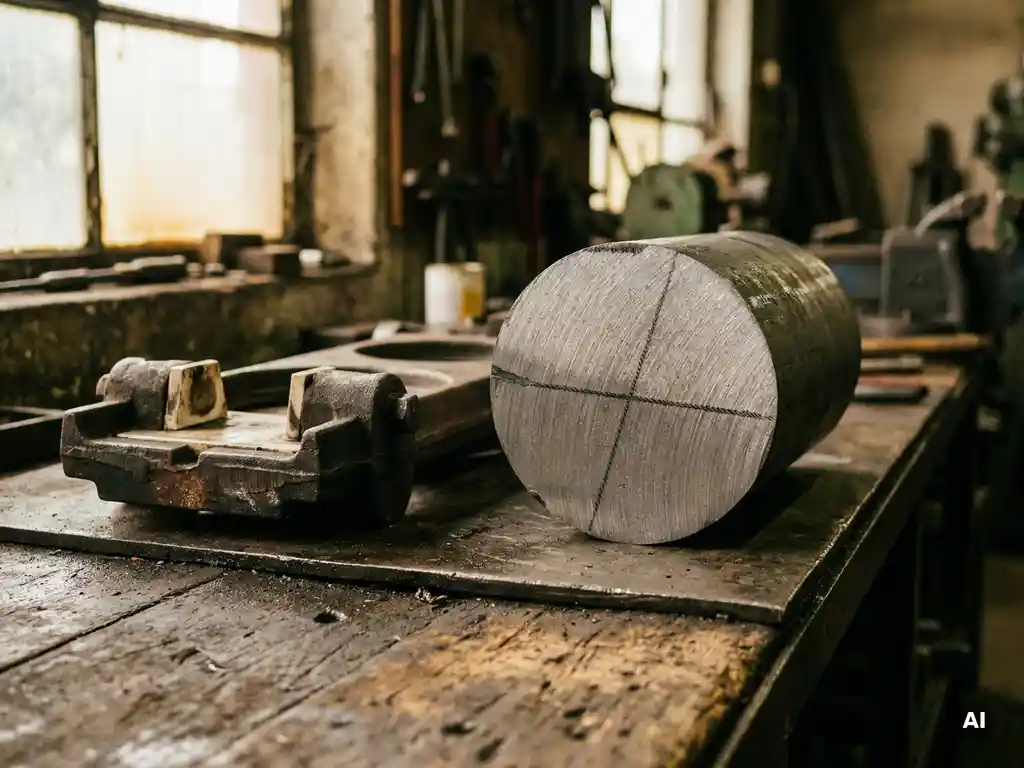
Centerline segregation in continuously cast steel billets occurs when solute elements such as carbon, sulfur, phosphorus, and manganese concentrate along the central axis of the billet during solidification. This happens because the last liquid steel to solidify at the center becomes progressively enriched in rejected solutes as the solidification front advances inward from the billet surface. The sections below examine the specific mechanisms, compositional factors, process variables, and remediation strategies that determine how severe this defect becomes in practice.
How does solidification create segregation in cast billets?
Solidification creates segregation in cast billets because solute elements have a lower solubility in solid steel than in liquid steel. As the solidification front moves from the cooled surface toward the billet center, the growing solid phase continuously rejects solutes into the remaining liquid. This enriched liquid migrates toward the last region to solidify, which is the centerline, producing a zone of elevated solute concentration.
This process is a direct consequence of the solute redistribution coefficient. For elements like carbon and sulfur, the equilibrium partition coefficient is well below one, meaning the solid phase accepts only a fraction of the solute present in the liquid at any given temperature. As solidification progresses over the full cross-section of a billet, the cumulative effect of this rejection is substantial. The result is a central region that can contain significantly higher carbon and sulfur levels than the bulk composition would suggest, creating a chemical inhomogeneity that persists through rolling and downstream processing.
What steel composition factors worsen centerline segregation?
Higher carbon content, elevated sulfur, high phosphorus, and increased manganese all worsen centerline segregation in continuously cast billets. Carbon is the most influential element because it has a low partition coefficient and a wide solidification interval, meaning carbon-rich grades freeze over a broader temperature range and give solutes more time to redistribute toward the center.
Sulfur compounds the problem because it forms low-melting-point sulfide phases that remain liquid well into the final stages of solidification, concentrating at the centerline alongside carbon. Phosphorus behaves similarly and is particularly damaging in high-strength structural grades where centerline phosphorus enrichment can reduce toughness. Manganese, while less severe than sulfur or phosphorus in its segregation tendency, contributes to the overall solute load and interacts with sulfur to influence the morphology of sulfide inclusions at the centerline.
Steelmakers targeting clean steel production therefore place significant emphasis on reducing sulfur and phosphorus to the lowest practical levels before casting, since composition control at the ladle stage directly limits the severity of segregation in the final billet.
Which casting process parameters contribute to centerline segregation?
The casting parameters that most strongly contribute to centerline segregation are casting speed, superheat, secondary cooling intensity, and the uniformity of cooling across the billet cross-section. High casting speeds reduce the time available for heat extraction, extend the mushy zone, and increase the risk of liquid flow toward the centerline. Elevated superheat similarly extends the liquid pool and prolongs the period during which solute redistribution can occur.
Insufficient or uneven secondary cooling allows the solidification front to advance unevenly, creating asymmetric solute accumulation and, in severe cases, internal cracks that serve as pathways for enriched liquid to migrate. Oscillation mark depth and mold powder performance also influence the heat transfer in the mold zone, with poor mold lubrication contributing to surface irregularities that disturb the early solidification shell.
Operators working to minimize continuous casting defects typically optimize casting speed for each steel grade, reduce superheat to the lowest level consistent with avoiding nozzle freezing, and calibrate secondary cooling zones to maintain a steady, controlled solidification rate from surface to center.
What role does the mushy zone play in segregation formation?
The mushy zone is the two-phase region between the fully liquid core and the fully solid shell where solid dendrites coexist with interdendritic liquid. It plays a central role in centerline segregation because solute-enriched liquid within this zone can be driven toward the billet center by a combination of thermal contraction, ferrostatic pressure, and bulging of the strand shell between support rolls.
As the dendrite network thickens, the permeability of the mushy zone decreases. If the ferrostatic pressure or mechanical deformation of the strand forces enriched liquid to flow through this partially solidified network before permeability is lost, that liquid accumulates at the centerline. The wider and longer the mushy zone, the greater the opportunity for this flow to occur and the more severe the resulting segregation band.
Wide mushy zones are associated with high-carbon grades, high superheat, and slow secondary cooling. Reducing the length of the mushy zone through tighter superheat control and optimized cooling is therefore one of the primary metallurgical strategies for limiting the causes of billet segregation at the process level.
How does soft reduction reduce centerline segregation in billets?
Soft reduction reduces centerline segregation by applying a small, controlled mechanical compression to the strand in the region where the mushy zone approaches final solidification. This compensates for the volumetric shrinkage that occurs as the last liquid solidifies, preventing the inward flow of solute-enriched liquid that would otherwise concentrate at the centerline.
Without soft reduction, thermal contraction at the solidification front creates a slight pressure gradient that draws enriched interdendritic liquid toward the center. By squeezing the strand by a precisely calculated amount, soft reduction counteracts this suction effect. The technique requires accurate knowledge of the solidification end point, which depends on steel grade, casting speed, and cooling conditions, so its effectiveness depends on careful process modeling and real-time control.
When applied correctly, soft reduction is one of the most effective process interventions for improving the internal quality of continuously cast billets and blooms, particularly in medium- and high-carbon grades where centerline segregation would otherwise be most pronounced.
How is centerline segregation detected and measured in steel billets?
Centerline segregation in steel billets is detected and measured primarily through macroetch testing, sulfur print (Baumann print) analysis, and quantitative chemical analysis of cross-sectional samples. Macroetching with acid reveals the segregation pattern visually as a darkened central zone, and the result is typically rated against standardized reference diagrams to assign a segregation class.
Sulfur printing provides a complementary visual map of sulfur distribution across the billet cross-section, with sulfide concentrations at the centerline appearing as dark stains on sensitized photographic paper. For more precise quantification, electron probe microanalysis (EPMA) and optical emission spectrometry on drilled samples from the centerline region can measure the actual chemical enrichment relative to the nominal composition.
Ultrasonic testing offers a non-destructive alternative for detecting internal discontinuities associated with severe segregation or accompanying porosity, though it is less sensitive to mild segregation than metallographic methods. In quality-critical applications, steelmakers typically combine visual macroetch rating with periodic chemical verification to maintain consistent internal quality standards across production runs.
How KNÖLLINGER FLO-TEC supports clean steel quality in continuous casting
Controlling centerline segregation starts well before the strand enters the mold. The quality of steel delivered to the tundish depends directly on how well the ladle flow is managed during casting, and this is where we at KNÖLLINGER FLO-TEC contribute to the process.
- Inert-gas shielding capability: Our GT slide gate series can be flooded with inert gas such as argon to help reduce contact between molten steel and atmospheric oxygen, supporting cleaner steel at the ladle outlet.
- Reliable flow control: Consistent, controllable steel flow from the ladle into the tundish helps operators maintain stable casting conditions, including the superheat levels and casting speeds that directly influence segregation severity.
- Flexible plate compatibility: Our systems are designed to accommodate different patent-free refractory plate formats, reducing dependence on a single refractory supplier and supporting supply-chain resilience for steelworks.
- Customized solutions: We develop slide gate systems for different ladle sizes and operating requirements, including grades where clean steel targets and tight segregation limits demand the highest process consistency.
If you want to discuss how our ladle slide gate systems can support your casting quality targets, we welcome direct technical conversations with plant managers, metallurgists, and production engineers. Contact our team to start the discussion.
Dieser Inhalt wurde mithilfe von KI erstellt und kann Fehler enthalten.