

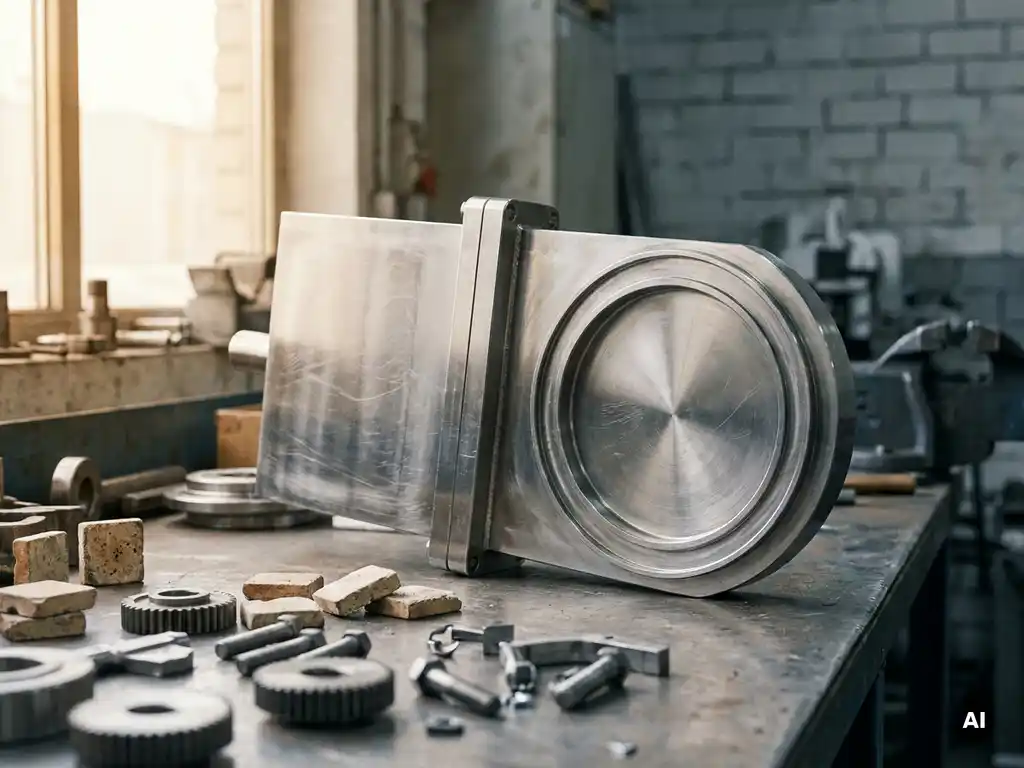
Calcium treatment changes the behaviour of alumina inclusions in steel by transforming them from solid, hard particles into liquid calcium aluminate compounds. These modified inclusions are far less likely to deposit on refractory surfaces during casting, which directly reduces nozzle clogging and supports the production of cleaner, higher-quality steel. The sections below address the most important questions about how this process works, when it applies, and how steelmakers measure its success.
What happens to alumina inclusions when calcium is added to steel?
When calcium is added to liquid steel, it reacts with solid alumina inclusions (Al2O3) to form calcium aluminates. Depending on the calcium-to-aluminium ratio achieved, the resulting phases range from calcium monoaluminate through to calcium hexaluminate. The target is to produce calcium aluminates that remain liquid at steelmaking temperatures, typically above 1,500 degrees Celsius, so that they do not adhere to refractory surfaces.
The transformation is a progressive one. At low calcium additions, only partial modification occurs and mixed phases form, some of which are still solid and potentially harmful. As the calcium content increases, the inclusion composition moves through the calcium aluminate phase diagram toward the fully liquid region. Achieving full modification means the inclusions are soft, spherical, and chemically stable enough to pass through the casting system without building up on nozzle walls or slide-gate components.
Beyond their physical state, modified inclusions also tend to cluster and float out of the melt more readily than irregular solid alumina particles. This flotation effect further reduces the total inclusion count in the final product, contributing to what the industry broadly refers to as clean steel production.
Why do untreated alumina inclusions cause nozzle clogging?
Untreated alumina inclusions cause nozzle clogging because solid Al2O3 particles have a strong tendency to sinter together and adhere to refractory surfaces at steelmaking temperatures. Once a layer begins to form on the inner walls of a submerged entry nozzle or ladle shroud, it grows progressively, restricting steel flow and eventually forcing an unplanned casting interruption.
The problem is driven by several factors working together. Alumina has a very high melting point, around 2,050 degrees Celsius, so the particles remain solid throughout the ladle metallurgy and casting process. Their irregular, angular shape increases the likelihood of mechanical interlocking once they contact a surface. And because alumina is chemically reactive with many refractory materials, chemical bonding between the inclusion and the nozzle wall accelerates deposit formation.
From an operational standpoint, clogging creates serious difficulties. Flow rate becomes inconsistent, making it harder to control casting speed and strand quality. Operators may attempt to clear blockages by lancing with oxygen, which introduces reoxidation risk and can compromise the steel’s cleanliness. In the worst cases, the sequence must be interrupted entirely, with direct consequences for productivity and yield. Effective inclusion modification through calcium treatment is therefore one of the most practical tools available to steelmakers targeting stable, high-quality continuous casting operations.
What is the correct calcium-to-aluminium ratio for full inclusion modification?
The widely accepted target for full calcium treatment of alumina inclusions is a calcium-to-aluminium ratio (Ca/Al) of approximately 0.10 to 0.14 by weight in the final steel. Within this range, the calcium aluminate phases that form are predominantly liquid at casting temperatures, meaning the inclusions remain soft and non-adhesive as they pass through the ladle slide gate and casting system.
Achieving this ratio in practice is more complex than it appears. Calcium has an extremely low solubility in liquid steel and a high vapour pressure at steelmaking temperatures, which means a large proportion of the calcium added through wire injection or other methods is lost before it can react with inclusions. The actual yield of calcium in steel typically ranges from a few percent upward, depending on steel temperature, ladle geometry, and injection technique.
Undershooting the target ratio leaves partially modified inclusions that are still solid and prone to clogging. Overshooting it, on the other hand, can lead to the formation of calcium sulphide (CaS) if sulphur content is not adequately controlled, or to the generation of high-calcium aluminate phases that, while liquid, may cause other metallurgical issues. Metallurgists therefore treat the Ca/Al ratio as a carefully managed process parameter rather than a fixed addition rule, adjusting it based on the steel grade, sulphur level, and casting conditions of each heat.
How does calcium treatment interact with sulphur content in steel?
Calcium reacts preferentially with sulphur before it reacts with alumina inclusions. In steel with elevated sulphur content, a significant portion of the added calcium is consumed in forming calcium sulphide (CaS) rather than modifying alumina inclusions. This means that calcium treatment is substantially less effective in high-sulphur steels unless the sulphur level has been reduced during secondary metallurgy.
CaS itself presents a separate problem. It has a relatively high melting point and can form solid particles that deposit in nozzles in a similar way to unmodified alumina. In some cases, CaS co-precipitates with calcium aluminate inclusions, forming composite particles that are harder to manage than either compound alone.
For steelmakers targeting effective inclusion modification, the practical guidance from ladle metallurgy experience is clear: desulphurise first, then treat with calcium. Most calcium treatment practices are designed for steels with sulphur levels below 0.010 to 0.015 percent by weight. Above these levels, the calcium demand increases sharply and the risk of CaS-related problems grows. The interaction between calcium and sulphur is one of the primary reasons why calcium treatment must be integrated into a broader secondary metallurgy strategy rather than applied as a standalone step.
What methods are used to inject calcium into liquid steel?
The most widely used method for injecting calcium into liquid steel is cored wire injection, in which a steel sheath filled with calcium or calcium-silicon alloy is fed into the ladle at a controlled speed using an injection machine. The sheath delays the release of calcium until the wire reaches a sufficient depth, improving the yield of calcium in the steel by reducing vapour losses at the surface.
Several other methods are also used, depending on plant configuration and the specific requirements of the steel grade:
- Calcium-silicon (CaSi) wire: The most common cored wire variant, combining calcium with silicon to improve handling and yield. Silicon acts as a carrier and modifies the vapour pressure behaviour of calcium.
- Pure calcium wire: Used where silicon additions are undesirable, such as in certain low-silicon steel grades. Requires precise injection depth control to achieve acceptable yield.
- Calcium carbide additions: Less common, but used in some operations for combined desulphurisation and inclusion modification.
- Powder injection: Calcium-bearing powders can be injected through a lance submerged in the ladle. This method offers good mixing but requires careful control of injection parameters to manage yield and avoid excessive turbulence.
The choice of method affects not only calcium yield but also the consistency of inclusion modification across the heat. Injection depth, wire feed speed, and ladle stirring conditions all influence how uniformly the calcium distributes through the melt and reacts with inclusions. Reliable flow control through the ladle slide-gate system is important at this stage, since stable conditions in the ladle support more predictable calcium distribution and reaction kinetics.
How is the effectiveness of calcium treatment measured in practice?
The effectiveness of calcium treatment is measured through a combination of steel sample analysis, inclusion characterisation, and casting performance monitoring. No single measurement gives a complete picture, so steelmakers typically use several indicators together to assess whether the treatment has achieved the desired result.
Chemical analysis of the treated steel
The most immediate check is the measurement of calcium content in the steel sample taken after treatment, combined with the aluminium and sulphur levels already known from earlier analysis. From these values, metallurgists calculate the Ca/Al ratio and assess whether it falls within the target window for full inclusion modification. If the ratio is too low, the treatment may need to be repeated or the injection parameters adjusted for subsequent heats.
Inclusion characterisation techniques
A more detailed assessment involves analysing inclusions directly. Automated scanning electron microscopy with energy-dispersive X-ray spectroscopy (SEM-EDS) allows metallurgists to examine the composition, size, and morphology of inclusions in solidified steel samples. Modified inclusions appear as rounded, glassy calcium aluminate particles rather than the irregular, faceted alumina clusters seen in untreated steel. The proportion of fully modified inclusions relative to partially or unmodified ones gives a direct measure of treatment success.
Casting performance indicators
In continuous casting, the practical outcome of effective calcium treatment is visible in casting performance. Stable nozzle bore diameter over the course of a sequence, consistent casting speed, and the absence of clogging events all indicate that inclusion modification has been successful. Plants with instrumented casting systems can track nozzle opening trends in real time, giving operators an indirect but operationally relevant measure of inclusion cleanliness. Consistent performance across a sequence, without the need for corrective interventions, is one of the clearest signs that the calcium treatment and the broader ladle metallurgy process are working as intended.
How KNÖLLINGER FLO-TEC supports clean steel production
Calcium treatment is only as effective as the casting system that follows it. If the ladle slide gate introduces turbulence, allows reoxidation, or fails to maintain consistent flow, the benefits of careful inclusion modification can be lost before the steel reaches the mould. This is where reliable slide-gate technology plays a direct role in clean steel outcomes.
We at KNÖLLINGER FLO-TEC design ladle slide-gate systems specifically for steelworks that take inclusion control and steel cleanliness seriously. Our systems are built to support the demands of modern ladle metallurgy, including:
- Inert-gas shielding capability to help reduce reoxidation during casting
- Robust construction using high-quality, temperature-resistant materials suited to the thermal and mechanical demands of steel ladle service
- Compatibility with a wide range of patent-free refractory plate formats, reducing dependence on a single refractory supplier
- Customised configurations for different ladle sizes and operating requirements
- Enclosed design features that support operational safety in the event of a leak
If you want to discuss how our slide-gate systems can support your inclusion control strategy and clean steel targets, get in touch with our team directly. We are glad to review your specific ladle configuration and operating conditions.
Dieser Inhalt wurde mithilfe von KI erstellt und kann Fehler enthalten.