
'/%3E%3C/svg%3E)
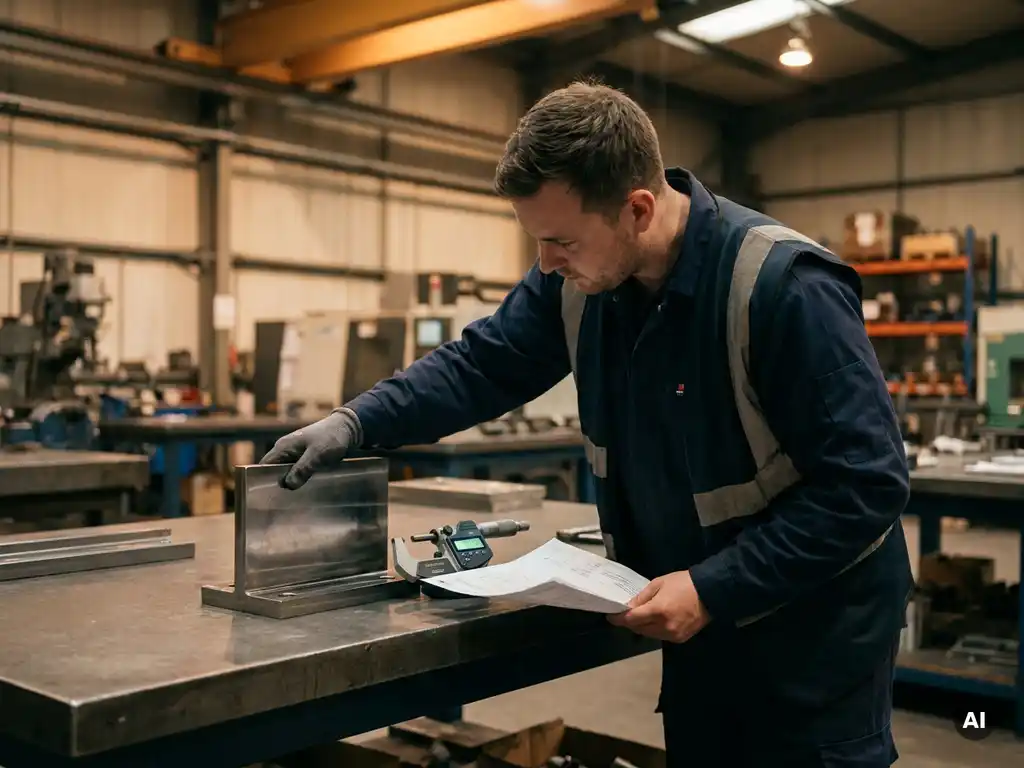
Steelmakers verify compliance with EN and ASTM standards simultaneously by conducting parallel testing programs that satisfy both frameworks, mapping equivalent grades across the two systems, and working with accredited third-party laboratories capable of issuing dual certifications. This approach is most relevant for producers supplying international markets where customers or end-use regulations specify one standard but the producer’s domestic quality system is built around the other. The sections below address the most common technical and procedural questions that arise when managing both frameworks at once.
What are the key differences between EN and ASTM steel standards?
EN and ASTM steel standards differ primarily in their organizational philosophy, grade designation systems, and the way they balance chemical composition against mechanical performance. EN standards, published by the European Committee for Standardization, tend to define grades through a combination of yield strength, application class, and delivery condition. ASTM standards, published by ASTM International, more often emphasize specific chemical limits and tensile properties measured under defined test conditions.
The grade naming conventions reflect this difference clearly. An EN designation such as S355J2 encodes minimum yield strength and impact toughness class directly into the name. An ASTM designation such as A572 Grade 50 references a specification number and a strength level, but the full picture requires reading the specification document. This means that two grades with similar mechanical properties can look entirely different on paper, which creates real complexity for procurement teams and quality engineers working across both systems.
Beyond naming, EN standards often include more prescriptive requirements around delivery conditions, heat treatment, and traceability documentation. ASTM standards, by contrast, frequently allow greater flexibility in process route as long as the finished product meets the specified properties. Neither approach is inherently superior; they reflect different regulatory and industrial traditions that steelmakers must understand before attempting any form of dual compliance.
Which steel properties are tested differently under EN and ASTM?
The properties most commonly tested differently under EN and ASTM standards are tensile strength, impact toughness, and chemical composition reporting. While both frameworks measure these properties, they use different specimen geometries, test temperatures, and reporting conventions, which means results are not always directly comparable even when the underlying material is identical.
Tensile testing illustrates this well. EN standards typically use proportional test specimens with gauge lengths defined relative to cross-sectional area, following ISO 6892-1. ASTM tensile testing follows ASTM E8/E8M, which specifies fixed gauge lengths and different specimen geometries. The resulting yield strength and elongation values can differ measurably for the same material, which is why test reports must always reference the applicable standard rather than presenting bare numbers.
Impact toughness testing shows a similar pattern. EN standards require Charpy V-notch testing at temperatures specified by the grade designation, reported in joules. ASTM specifications also use Charpy V-notch testing but may specify different temperatures, different minimum energy values, and different sampling requirements depending on product form and application. Chemical composition reporting differs as well: EN standards often require reporting of carbon equivalent values calculated to specific formulas, while ASTM specifications may use different carbon equivalent formulas or omit them entirely for certain grades.
How do steelmakers map equivalent grades across both standards?
Steelmakers map equivalent grades across EN and ASTM standards by comparing minimum mechanical properties, chemical composition ranges, and intended applications side by side, then identifying pairs or groups where the overlap is sufficient for a given end use. No official universal equivalence table exists, so this mapping process always requires engineering judgment and customer agreement.
The starting point is usually a property-by-property comparison. A quality engineer will place the yield strength, tensile strength, elongation, and impact toughness requirements of the EN grade next to those of the candidate ASTM grade. Where the ASTM grade meets or exceeds every EN requirement, a provisional equivalence can be proposed. Chemical composition must then be checked separately, because a grade that satisfies mechanical requirements may still fall outside the chemical limits of the other standard, which can affect weldability, heat treatment response, or regulatory acceptance.
Published cross-reference tables from steel associations, technical institutes, and major steel producers provide a useful starting framework, but they should be treated as guidance rather than certification. The final equivalence determination should be documented, reviewed by a metallurgist, and agreed in writing with the customer or specifying body. For safety-critical applications, additional testing to both standards on the same heat of steel is the most reliable approach.
What testing and certification processes support dual compliance?
Dual compliance is supported by a testing and certification process that generates inspection documents valid under both EN and ASTM frameworks from the same heat of steel. This typically involves accredited third-party laboratories, dual-standard test plans agreed before production, and inspection certificates that reference both standards explicitly.
The most practical approach is to design the test plan so that a single set of test specimens covers the requirements of both standards wherever possible. Where specimen geometry or test conditions differ, separate specimens are prepared and tested in parallel. An accredited inspection body then issues a certificate, commonly an EN 10204 3.1 or 3.2 certificate, that lists results against both standard requirements in a single document. Some customers and certification bodies require the certificate to state explicitly that the material was tested and found compliant with each standard independently.
Laboratory accreditation matters significantly here. The testing laboratory must hold accreditation under both the relevant EN ISO standards and the applicable ASTM test methods. Not all laboratories hold both, so verifying accreditation scope before selecting a testing partner avoids delays and rejected certificates later. For producers supplying regulated applications such as pressure vessels or structural components in buildings, the certification chain must also satisfy any applicable national regulatory requirements in the destination market, which may add further documentation steps beyond the mill certificate itself.
Maintaining a clear internal record of which heats have been dual-certified, which test results apply to which standard, and which customers have received which certificates is equally important. Technical documentation resources can support quality teams in structuring this traceability systematically.
When should steelmakers prioritize one standard over the other?
Steelmakers should prioritize EN standards when supplying European markets subject to CE marking requirements, when the end-use application falls under a European harmonized standard, or when the customer’s engineering specifications are written around EN grades. ASTM standards should take priority when supplying North American markets, when the customer’s design code references ASTM explicitly, or when the applicable pressure vessel, structural, or piping code is built on ASTM material specifications.
In practice, the customer’s purchase order and the applicable design code are the most reliable guides. A steelmaker producing material for a pipeline project governed by ASME B31.3 must satisfy the ASTM material specifications referenced in that code, regardless of what the producer’s domestic quality system uses. Conversely, a producer supplying structural steel for a building project in Germany subject to Eurocode 3 must meet the EN 10025 requirements that the code references.
Where both standards apply equally, for example when a multinational customer accepts either and the producer has freedom of choice, the practical decision usually comes down to which standard the producer’s existing quality system, testing equipment, and laboratory accreditations best support. Switching the primary standard for a single order creates administrative complexity and increases the risk of documentation errors, so continuity within the producer’s established framework is generally preferable unless there is a strong commercial reason to do otherwise.
What are the most common compliance gaps when applying both standards?
The most common compliance gaps when applying EN and ASTM standards simultaneously are mismatched impact testing temperatures, differences in carbon equivalent calculation methods, inconsistent traceability documentation, and the incorrect assumption that a grade meeting one standard automatically satisfies the other. Each of these gaps can result in rejected material, delayed shipments, or liability issues if not addressed systematically.
Impact testing temperature mismatches are particularly frequent. A steel grade that satisfies EN impact requirements at a specified temperature may not have been tested at the temperature required by the ASTM specification for the same application category, or vice versa. Because impact test results are temperature-sensitive and cannot be extrapolated reliably, this gap requires actual testing at the correct temperature rather than a mathematical adjustment.
Carbon equivalent discrepancies arise because EN and ASTM standards use different formulas to calculate this value, and the results can differ enough to affect weldability assessments. A material that appears weldable under one formula may require preheat or post-weld heat treatment when assessed under the other, which has direct consequences for fabricators downstream.
Documentation gaps are equally problematic. EN 10204 inspection certificate types are not universally understood outside Europe, and ASTM certified test reports follow different conventions. When a customer or regulatory body receives a certificate formatted for one framework but expects the other, acceptance can be delayed or refused. Training quality and commercial teams to recognize these differences and communicate them clearly to customers is a straightforward way to reduce this risk.
Finally, the assumption of automatic equivalence is the gap that causes the most significant problems. Grade equivalence tables are approximations, and they do not account for all the variables that affect real-world compliance. Every dual-standard claim should be backed by actual test data against both standards, not by reference to a published equivalence table alone.
How KNÖLLINGER FLO-TEC supports clean steel production in demanding dual-standard environments
When steelmakers operate under multiple quality frameworks simultaneously, the pressure on every stage of the production process increases. Steel cleanliness, consistent chemistry, and reliable flow control during casting become even more important when the same heat of steel must satisfy parallel sets of mechanical and chemical requirements.
We design our ladle slide gate systems specifically to support the conditions that clean steel production demands. For steelworks producing high-specification material where EN and ASTM compliance must be verified on the same heat, our systems offer several relevant advantages:
- Inert-gas shielding capability to help reduce reoxidation during casting, supporting consistent inclusion levels and chemical composition across the heat
- Reliable flow control that supports stable casting conditions, which contributes to uniform mechanical properties throughout the product
- Enclosed system design that supports operational safety and helps contain steel in the event of a leak
- Compatibility with a range of patent-free refractory plate formats, reducing dependence on a single refractory supplier and supporting supply-chain continuity
- Customized solutions for different ladle sizes and operating requirements, including continuous casting and ingot casting applications
If you produce steel to demanding international specifications and want to discuss how our ladle slide gate systems can support your quality objectives, we welcome the conversation. Contact our team to talk through your specific application and operating conditions.
Dieser Inhalt wurde mithilfe von KI erstellt und kann Fehler enthalten.