

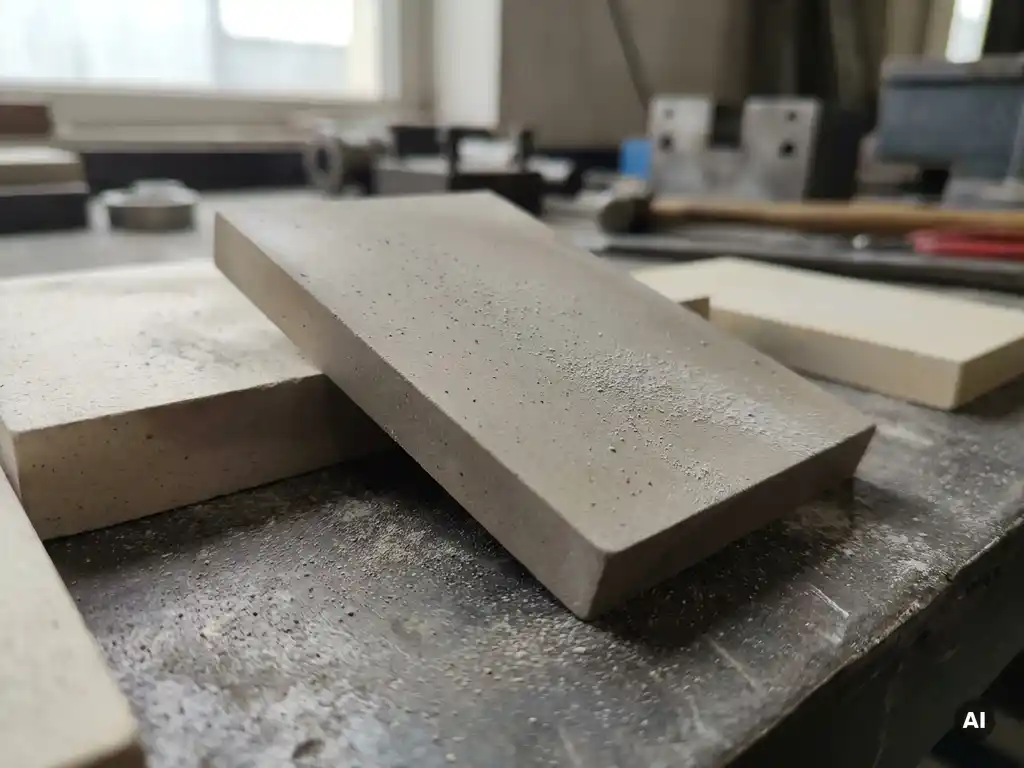
Steelmakers select refractory materials by evaluating chemical compatibility with the steel grade being produced, thermal resistance under operating conditions, and the material’s tendency to release inclusions into the melt. The goal is to minimize any interaction between the refractory lining and molten steel that could introduce oxides, carbon, or other contaminants. The sections below address the most common questions technical teams raise when making these decisions.
What types of refractory materials are used in steelmaking?
The most widely used refractory materials in steelmaking are alumina-based, magnesia-based, and alumina-carbon compositions. Each type is selected based on the specific zone of the steelmaking vessel, the steel grade being processed, and the thermal and chemical stresses involved in that application.
In ladle metallurgy, alumina-magnesia-carbon (AMC) and alumina-spinel compositions are common choices for the ladle lining because they resist slag attack and maintain structural integrity across multiple heats. For slide gate plates, alumina-carbon or alumina-zirconia-carbon materials are frequently used because they combine high thermal shock resistance with low porosity, which limits steel penetration into the refractory body.
Magnesia-carbon refractories are often preferred in the converter and electric arc furnace, where basic slag conditions dominate. In contrast, the ladle and tundish environment demands materials that can handle both the steel melt and the ladle slag chemistry without releasing harmful elements into the liquid steel.
How does refractory composition affect steel cleanliness?
Refractory composition directly affects steel cleanliness because the chemical constituents of the lining can dissolve into or react with molten steel, generating non-metallic inclusions. Materials with high silica content, for example, can contribute to silica-based inclusions, while carbon-bonded refractories may influence the carbon balance in low-carbon steel grades.
Porosity is another critical factor. A refractory with high open porosity allows molten steel and slag to infiltrate the material, accelerating wear and releasing particles into the melt. Low-porosity, dense refractories reduce this risk significantly. For clean steel production, this means selecting lining materials with tightly controlled chemistry, minimal free silica, and low levels of impurities that could migrate into the steel.
The bonding phase within the refractory also matters. Carbon-bonded systems can oxidize at high temperatures if the atmosphere is not controlled, producing CO gas that may cause turbulence and promote reoxidation. This is one reason why inert-gas shielding during casting is so valuable when producing high-quality steel grades.
What role do slide gate systems play in preventing contamination?
Slide gate systems control the flow of molten steel from the ladle to the tundish or mold, and their design directly influences the risk of steel contamination. A well-engineered slide gate limits air ingress at the flow control point, supports the use of inert-gas shielding, and maintains consistent contact between the refractory plates to prevent steel leakage and oxygen pickup.
The refractory plates within the slide gate are the components most exposed to thermal shock, erosion, and chemical attack. If these plates develop cracks, uneven wear, or poor face-to-face contact, air can enter the steel stream and cause reoxidation. The resulting oxide inclusions reduce steel cleanliness and can compromise downstream product quality.
Systems designed for clean steel production can be equipped with inert-gas shielding, which helps reduce contact between the steel stream and atmospheric oxygen during casting. This is particularly relevant for grades where low inclusion content is a strict quality requirement, such as automotive steel, bearing steel, or pipe grades for demanding applications.
How do steelmakers evaluate refractory quality before installation?
Before installation, steelmakers typically evaluate refractory quality through a combination of material certification, physical testing, and supplier audits. Key parameters include bulk density, apparent porosity, cold crushing strength, and thermal shock resistance. For slide gate plates specifically, flatness and surface finish are also measured because poor contact between plates creates gaps that allow steel to penetrate.
Chemical analysis of incoming refractory materials helps confirm that the composition matches the specification and that impurity levels are within acceptable limits. Some plants also conduct hot modulus of rupture tests to assess how the material performs under conditions closer to actual service temperatures.
Traceability is important as well. Refractory materials used in ladle slide gates should come with documented batch records so that any quality deviations can be traced back to a specific production lot. This matters when investigating the source of inclusion problems or unexpected lining wear.
What’s the difference between single-use and multi-heat refractory systems?
Single-use refractory components are replaced after every heat, while multi-heat systems are designed to remain in service across several heats before replacement. The choice between them involves a trade-off between material cost, labor, safety, and the consistency of steel quality across heats.
Single-use systems offer predictability. Because the component is new at the start of every heat, the risk of wear-related failure or contamination from a degraded refractory is lower. This approach is common for high-value steel grades where any quality variation is unacceptable.
Multi-heat systems reduce material consumption and the frequency of change-out operations, which can lower both cost and the safety risks associated with handling hot components. However, they require robust inspection routines to confirm that the refractory remains fit for service after each heat. Slide gate plates, for example, are often evaluated after each use to determine whether they can be reused or must be replaced, based on wear depth, crack formation, and surface condition.
When should steelmakers switch refractory materials or suppliers?
Steelmakers should consider switching refractory materials or suppliers when they observe a consistent deterioration in steel cleanliness, an increase in inclusion counts, unexplained lining wear patterns, or repeated slide gate failures that cannot be attributed to operating conditions alone. These signals often indicate that the refractory material is no longer performing to specification or that the supplier’s quality control has become inconsistent.
Changes in steel grade portfolio are another common driver. If a plant moves toward cleaner, more demanding grades, the refractory system that was adequate for commodity steel may no longer be sufficient. New grades may require materials with lower silica content, tighter porosity limits, or specific chemical compositions that the current supplier cannot provide.
Supply-chain disruptions are also a practical reason to evaluate alternative sources. Relying on a single refractory supplier for critical components like slide gate plates creates vulnerability. Slide gate systems that are compatible with multiple patent-free plate formats give steelworks more flexibility to source from different approved suppliers without modifying the mechanical hardware. This reduces dependency and supports continuity of production even when supply conditions change.
How KNÖLLINGER FLO-TEC supports cleaner steel production
We develop and manufacture ladle slide gate systems specifically for steelworks that prioritize steel cleanliness, operational safety, and supply-chain flexibility. Our systems are designed to address the practical challenges that technical teams face when selecting and managing refractory materials in demanding production environments.
- Inert-gas shielding capability: Our GT series slide gate systems can be flooded with inert gas such as argon, helping to reduce contact between the steel stream and atmospheric oxygen during casting.
- Compatibility with multiple plate formats: Our slide gate systems can be adapted to accommodate different patent-free refractory plate formats, which means you are not locked into a single refractory supplier and can maintain supply security.
- Robust construction: Systems are built from high-quality, temperature-resistant materials to withstand the thermal and mechanical stresses of ladle metallurgy applications.
- Customized solutions: We develop systems for different ladle sizes and operating requirements, including configurations for both continuous casting and ingot casting.
- ISO 9001:2015 certification: Our quality management system provides documented traceability and process control across all products we supply.
If you want to discuss how our slide gate systems can support your refractory strategy and clean steel objectives, contact our team directly. You can also download technical documentation to review our product specifications in detail.
Dieser Inhalt wurde mithilfe von KI erstellt und kann Fehler enthalten.