

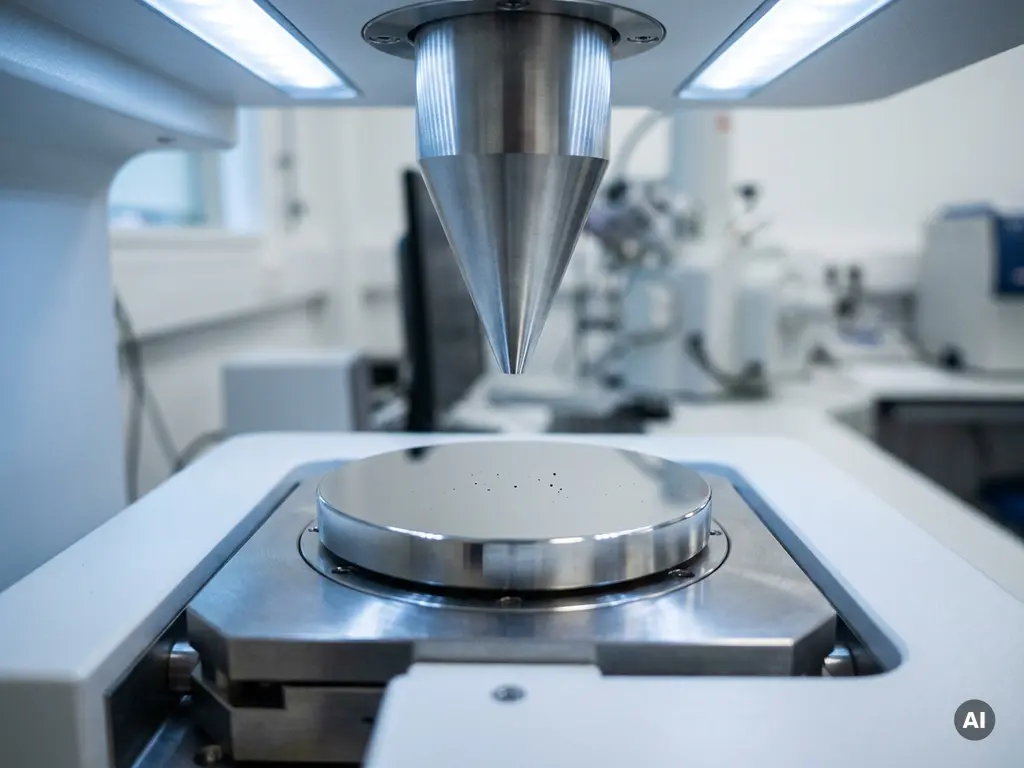
Steelmakers measure inclusion density in high-cleanliness steel grades using a combination of automated scanning electron microscopy with energy-dispersive X-ray spectroscopy (SEM-EDS), optical microscopy with image analysis, total oxygen measurement, and standardized rating charts such as ASTM E45 or ISO 4967. No single method gives the full picture, so most quality-focused plants combine two or more techniques depending on the grade and application. The sections below unpack the most important questions around inclusion analysis, from choosing the right method to understanding how casting practice shapes your results.
What methods are used to quantify non-metallic inclusions in steel?
The main methods used to quantify non-metallic inclusions in steel are optical microscopy with standardized rating charts, automated SEM-EDS analysis, total oxygen content measurement, ultrasonic testing, and slime extraction followed by chemical analysis. Each method measures a different aspect of inclusion content, so the choice depends on what type of information the grade specification requires.
Optical microscopy using standards such as ASTM E45 or ISO 4967 remains widely used because it is fast, cost-effective, and directly comparable across laboratories. A trained metallographer examines a polished sample at defined magnification and assigns a severity rating based on the size, morphology, and distribution of inclusions across standardized categories: sulfides, alumina, silicates, and globular oxides.
Ultrasonic testing is applied to semi-finished or finished products to detect large individual inclusions or clusters that would be missed in a small metallographic sample. This is particularly relevant for bearing steels, tool steels, and other grades where a single large inclusion can cause fatigue failure.
Slime extraction, sometimes called electrolytic dissolution, dissolves the steel matrix and collects the inclusions for gravimetric or chemical analysis. This gives a bulk quantity of inclusion mass per unit weight of steel, which is useful for process control but provides limited information on size distribution or morphology.
How does automated SEM-EDS analysis measure inclusion density?
Automated SEM-EDS analysis measures inclusion density by systematically scanning a polished steel sample at high magnification, detecting individual inclusions based on their contrast with the steel matrix, and using energy-dispersive X-ray spectroscopy to classify each inclusion by chemical composition. The result is a statistical dataset covering thousands of inclusions per sample, including size, morphology, composition, and spatial distribution.
The automated system moves across the sample in a defined grid pattern, capturing backscattered electron images. Because non-metallic inclusions have a different average atomic number from the surrounding steel, they appear as distinct contrast features. The software identifies each inclusion, measures its equivalent diameter and area, and triggers an EDS spectrum to determine whether it is an alumina, calcium aluminate, spinel, sulfide, silicate, or complex multi-phase particle.
This level of detail is what makes automated SEM-EDS the preferred tool for high-cleanliness steel grades. It can distinguish between harmful angular alumina clusters and relatively benign calcium-modified globular inclusions, which look similar under an optical microscope but behave very differently during downstream processing. The output typically includes inclusion number density per unit area, size distribution histograms, and composition maps that process engineers can use to trace the source of contamination.
The practical limitation is throughput. A single automated SEM-EDS run on a standard sample may take 30 minutes to several hours depending on the area scanned and the inclusion population. For routine production control, faster screening methods are used first, with SEM-EDS reserved for qualification heats, grade development, or incident investigation.
What is the difference between total oxygen content and inclusion rating?
Total oxygen content measures the mass of oxygen dissolved in steel plus the oxygen bound in oxide inclusions, expressed in parts per million by weight. Inclusion rating, by contrast, describes the size, number, and morphology of non-metallic particles visible in a metallographic sample. Both relate to steel cleanliness, but they capture different dimensions of inclusion content and are not interchangeable.
Total oxygen is determined by inert-gas fusion, in which a small steel sample is melted in a graphite crucible under inert gas and the released oxygen is measured by infrared absorption. A low total oxygen value, typically below 15 to 20 ppm in well-deoxidized heats, indicates that the deoxidation practice has been effective. However, it does not reveal whether the remaining oxide content is distributed as many small harmless particles or as a few large damaging clusters.
Inclusion rating through optical microscopy or automated SEM-EDS addresses exactly that gap. A heat can have a low total oxygen content but still carry a damaging population of large alumina clusters if the refining and casting conditions allowed inclusions to agglomerate rather than float out. Conversely, a heat with slightly higher total oxygen but well-dispersed fine inclusions may perform adequately in many applications.
For demanding grades such as bearing steels, tire cord wire, or aerospace forgings, both measurements are specified. Total oxygen sets the upper limit on bulk oxide content, while inclusion rating or automated SEM-EDS analysis confirms that the spatial distribution and morphology of inclusions meet the grade’s fatigue and formability requirements.
Which steel grades require the strictest inclusion density limits?
The steel grades with the strictest inclusion density limits are bearing steels, tire cord and spring steels, aerospace-quality forgings, pressure vessel steels for hydrogen service, and certain tool and die steels. These grades share a common characteristic: their end-use performance depends on fatigue resistance, and non-metallic inclusions act as stress concentrators that initiate fatigue cracks.
Bearing steels such as 100Cr6 (SAE 52100) are often cited as the benchmark for inclusion cleanliness requirements. Fatigue life in rolling contact bearings is highly sensitive to large oxide inclusions, so producers typically specify total oxygen below 10 ppm and apply automated SEM-EDS to verify that inclusions above a defined threshold size are absent or extremely rare.
Tire cord wire and high-carbon spring steel require similar control because the wire drawing process itself will cause fracture if a hard alumina inclusion exceeds a critical size relative to the wire diameter. As wire diameters decrease with higher tensile strength grades, the permissible inclusion size decreases proportionally.
Pressure vessel steels intended for hydrogen service face a different but equally demanding requirement. Hydrogen-induced cracking initiates preferentially at elongated sulfide inclusions and oxide stringers, so these grades require both low sulfur content and calcium treatment to ensure that any residual sulfides remain globular rather than elongated during rolling.
In all these applications, the clean steel approach is not simply a quality preference but a functional necessity. The slide gate systems used during casting play a direct role in achieving these cleanliness levels, as discussed in the following section.
How do ladle shroud and slide gate practice affect inclusion counts?
Ladle shroud and slide gate practice directly affect inclusion counts by controlling the extent to which molten steel contacts atmospheric oxygen during transfer from ladle to tundish. Reoxidation at this transfer point generates fresh alumina inclusions that cannot be removed by further refining, and the quantity generated depends heavily on how well the flow is shielded and how the slide gate opening is managed.
When the ladle shroud is not properly seated or the connection between the shroud and the ladle outlet is not sealed, air is aspirated into the steel stream. This reoxidation event produces a burst of fine alumina particles that can agglomerate into clusters larger than those remaining after secondary metallurgy. Even a brief period of open-stream casting, for example during shroud changes or at the start and end of a heat, can measurably increase inclusion counts in the tundish sample.
The slide gate opening position also matters. Partially open gates create high-velocity turbulent flow that promotes air aspiration and can erode refractory material, introducing exogenous inclusions into the steel. Smooth, controlled flow through a properly sized gate opening reduces both turbulence-driven reoxidation and refractory erosion.
Inert gas shielding at the ladle shroud connection and through the slide gate system provides an additional barrier against reoxidation. Systems designed to support clean steel production use inert gas, typically argon, to displace air from the critical transfer zone, reducing the oxygen available to react with the steel. The effectiveness of this shielding depends on the integrity of the system design and the consistency of operating practice.
For steelworks producing grades with strict inclusion density limits, the ladle flow control system is not simply a mechanical component but a direct influence on the final inclusion population in the cast product. Consistent gate operation, reliable shroud seating, and effective inert gas coverage all contribute to the cleanliness data that metallurgists measure at the end of the process.
When should steelmakers validate cleanliness with plant-level versus laboratory methods?
Steelmakers should use plant-level methods for real-time process control during production and reserve laboratory methods for heat qualification, grade development, complaint investigation, and periodic process audits. The two approaches answer different questions and operate on different timescales, so effective cleanliness management uses both in a structured way.
Plant-level methods include total oxygen sampling from the tundish, rapid optical emission spectrometry for composition verification, and visual or sensor-based monitoring of the casting stream. These provide fast feedback that allows operators to intervene if a heat is trending toward unacceptable cleanliness before the cast product is committed to further processing. The limitation is that they measure bulk averages or indirect indicators rather than the actual inclusion population in the solidified steel.
Laboratory methods such as automated SEM-EDS, standardized optical rating, and ultrasonic inspection of finished samples provide the definitive cleanliness data that grade specifications require. These results are available hours or days after casting, which means they inform qualification decisions and process improvements rather than real-time control.
A practical approach for high-cleanliness grade production combines the two levels systematically. Plant-level total oxygen measurement on every heat sets a pass or hold threshold for further processing. Automated SEM-EDS analysis on qualification heats and periodic audit samples confirms that the process is consistently producing the inclusion population the specification requires. When a plant-level indicator signals an anomaly, laboratory analysis on that specific heat identifies the root cause and guides corrective action.
The frequency of laboratory validation should increase when process conditions change: after a refractory campaign change, after modifications to secondary metallurgy practice, after equipment maintenance on the ladle flow control system, or when a new grade is introduced. Stable, well-controlled processes require less frequent deep laboratory validation, but no process should rely on plant-level indicators alone for grade qualification.
How KNÖLLINGER FLO-TEC supports clean steel production
Measuring inclusion density is only one part of the challenge. Achieving consistently low inclusion counts requires that every stage of the casting process, including ladle flow control, operates reliably and with minimal reoxidation risk. That is where we focus.
Our ladle slide gate systems are designed specifically to support clean steel production in steelworks with demanding grade portfolios. The practical benefits we bring to your process include:
- Inert gas shielding capability: Our GT series systems can be purged with inert gas such as argon to reduce contact between the steel stream and atmospheric oxygen at the critical ladle-to-tundish transfer point.
- Reliable flow control: Consistent gate operation reduces turbulence-driven reoxidation and helps maintain the stable, controlled flow that low-inclusion casting requires.
- Compatibility with different refractory plate formats: Our systems can accommodate a range of patent-free plate formats, giving you flexibility in refractory sourcing without compromising process consistency.
- Robust construction: Systems built for demanding steelmaking environments, with an enclosed design that supports operational safety and reliable performance across campaigns.
- Customized solutions: We develop slide gate systems tailored to your specific ladle sizes and operating requirements, so the system fits your process rather than the other way around.
If your plant is working to tighten inclusion density limits or qualify a new high-cleanliness grade, we are ready to discuss how our systems can support your goals. Contact our team to start a technical conversation, or explore our product range to learn more about the slide gate systems we offer.
Dieser Inhalt wurde mithilfe von KI erstellt und kann Fehler enthalten.