
'/%3E%3C/svg%3E)
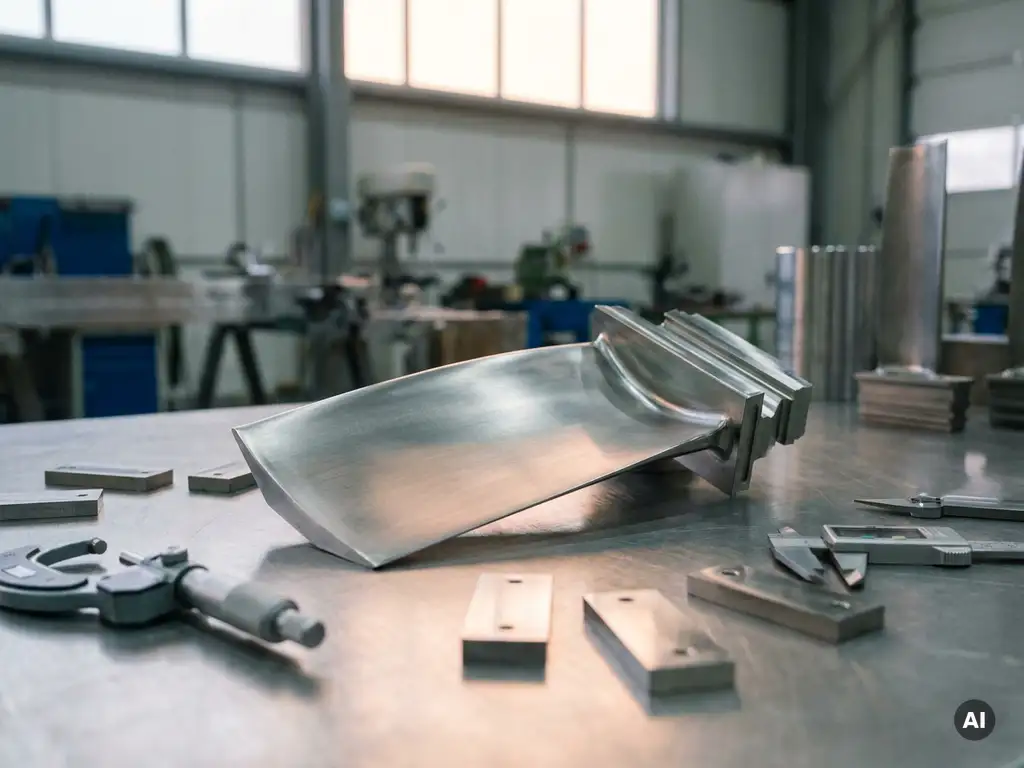
Electric arc furnace steel can meet aerospace cleanliness standards in 2026, but only when producers apply rigorous secondary metallurgy and process controls throughout the ladle treatment and casting stages. The route is viable, not automatic. Whether EAF steel qualifies for a specific aerospace application depends on the grade, the component’s criticality, and the qualification requirements set by the relevant specification body or OEM. The sections below address the key questions that metallurgists and procurement teams are asking right now.
What cleanliness standards do aerospace applications actually require?
Aerospace cleanliness standards for steel focus primarily on limiting non-metallic inclusions, controlling sulfur and oxygen content, and ensuring consistent mechanical properties across the entire melt. Standards such as AMS 2300, AMS 2304, and AMS 2301 define inclusion rating limits using methods like ASTM E45 or EN 10247. The most demanding grades require extremely low levels of oxide, sulfide, and silicate inclusions, often verified through ultrasonic testing and full melt traceability.
For rotating or highly stressed components such as bearing races, landing gear elements, or turbine shafts, the permissible inclusion size and frequency are tighter than in almost any other industry. Sulfur content is typically held below 0.015%, and total oxygen levels must be minimized to reduce the risk of oxide cluster formation. These are not soft targets. A single non-conforming heat can result in rejected forgings, costly retesting, and significant schedule impact for an aerospace program.
How does EAF steelmaking affect inclusion content and melt cleanliness?
EAF steelmaking introduces specific cleanliness challenges because the process relies on scrap as its primary raw material. Scrap variability means that tramp elements and residual oxides can enter the melt, and the electric arc process itself generates turbulent conditions that can trap slag and promote reoxidation if not carefully managed during tapping and ladle transfer.
The critical risk points in an EAF route are slag carryover during tapping, reoxidation during ladle treatment, and oxygen pickup during transfer and casting. Each of these events can generate oxide inclusions that are difficult to remove once they form in the steel. Ladle furnace treatment, vacuum degassing, and calcium treatment help address these risks, but the starting cleanliness of the melt and the quality of process controls at every step determine the final result.
Reoxidation during ladle-to-tundish transfer is a particularly important control point. Any contact between the steel stream and atmospheric oxygen at this stage can introduce inclusions that bypass the earlier refining steps entirely. This is one reason why ladle flow control systems designed to support inert-gas shielding are relevant to clean steel production from EAF routes.
What’s the difference between EAF and BOF steel for aerospace-grade applications?
The key distinction between EAF and BOF steel for aerospace applications lies in the raw material base and the baseline cleanliness of the liquid metal before secondary refining. BOF steel starts from hot metal produced in a blast furnace, which offers a more controlled and consistent input chemistry. EAF steel starts from scrap, which introduces greater variability in residual elements and initial inclusion content.
In practical terms, BOF routes have historically found it easier to achieve the very low sulfur and oxygen levels required for the most demanding aerospace specifications, partly because the hot metal input already has a low residual element burden. EAF producers must work harder in secondary metallurgy to reach the same endpoint. However, the difference is not absolute. With vacuum arc remelting (VAR) or electroslag remelting (ESR) as a final step, EAF-origin steel can reach cleanliness levels equivalent to or exceeding those of BOF-only routes, because the remelting process effectively resets the inclusion population regardless of the primary route.
For aerospace grades that do not require remelting, the comparison is more nuanced. BOF routes may retain a statistical advantage in baseline inclusion content, but well-controlled EAF operations with modern secondary metallurgy can produce steel that meets the same specifications. The evidence base for this has grown considerably as EAF technology and process control have advanced.
How can EAF producers achieve aerospace-level cleanliness in 2026?
EAF producers targeting aerospace cleanliness in 2026 need to apply a combination of scrap selection discipline, advanced secondary metallurgy, and rigorous process control from tapping through to solidification. No single step is sufficient on its own. The cleanliness of the final product reflects the cumulative effect of every decision made along the route.
The most important process levers available to EAF producers include:
- Scrap selection and sorting: Using low-residual scrap grades and, where possible, direct reduced iron (DRI) or hot briquetted iron (HBI) to reduce tramp element input and improve baseline cleanliness.
- Slag-free tapping: Minimizing slag carryover during tapping through slag detection systems and appropriate tap practices, since slag is a primary source of reoxidation and inclusion formation.
- Ladle furnace treatment: Applying synthetic slag refining, desulfurization, and deoxidation in the ladle furnace to reduce sulfur and oxygen to the levels aerospace specifications require.
- Vacuum degassing: Using vacuum tank degassing or RH degassing to remove hydrogen, reduce nitrogen, and further lower oxygen activity before casting.
- Calcium treatment: Modifying alumina inclusions into liquid calcium aluminates that are more easily removed and less harmful to mechanical properties.
- Inert-gas shielding during casting: Protecting the steel stream from reoxidation during ladle-to-tundish and tundish-to-mold transfer using shrouding and inert-gas systems.
- Remelting (VAR or ESR): For the most demanding aerospace grades, applying vacuum arc remelting or electroslag remelting as a final step to achieve the highest possible inclusion cleanliness and homogeneity.
Each of these steps requires not only the right equipment but also consistent execution across every heat. Process audits, statistical process control, and full heat traceability are standard expectations for aerospace-approved suppliers.
Which aerospace steel grades are currently approved from EAF routes?
Several widely used aerospace steel grades are approved from EAF routes, particularly when followed by remelting. Grades such as 300M, 4340, 9310, 52100, and various corrosion-resistant steels including 15-5PH and 17-4PH are produced via EAF and subsequently remelted to meet AMS and NADCAP requirements. The approval status of a specific grade from a specific producer depends on the qualification records held by that producer and accepted by the relevant OEM or specification authority.
For grades that do not require remelting, approval is possible but depends on demonstrated process capability. Some aerospace primes and specification bodies accept EAF-only routes for lower-criticality structural grades where the inclusion requirements are less stringent. For the most demanding rotating-component grades, remelting remains the standard expectation regardless of the primary melting route.
Producers seeking approval should engage directly with the relevant OEM qualification process and ensure that their process documentation, heat records, and test data meet the specific requirements of the applicable AMS or equivalent specification. Qualification is heat-producer specific, not route specific in isolation.
Should aerospace manufacturers qualify EAF sources for critical components?
Yes, aerospace manufacturers should seriously evaluate qualifying EAF sources for critical components, provided those sources can demonstrate consistent process capability and meet the applicable cleanliness specifications. Dismissing EAF routes on principle rather than on demonstrated performance is increasingly difficult to justify as EAF technology and secondary metallurgy have advanced significantly.
The business case for qualifying EAF sources includes supply chain resilience, geographic diversification, and access to producers who have invested in modern process controls specifically to serve demanding end markets. At the same time, qualification is not a formality. It requires rigorous assessment of the producer’s process, equipment, quality system, and track record.
Practical considerations for aerospace manufacturers evaluating EAF sources include:
- Whether the producer uses remelting for the specific grade and component type in question
- The producer’s demonstrated sulfur and oxygen control capability across multiple heats
- The quality and completeness of heat traceability and test documentation
- Third-party audit status and NADCAP or equivalent accreditation
- The producer’s experience supplying to aerospace-approved customers
A qualified EAF source that consistently meets AMS cleanliness requirements is a more reliable supply partner than an unqualified BOF source, regardless of the melting route. The route matters less than the demonstrated capability and the rigor of the qualification process.
How KNÖLLINGER FLO-TEC supports clean steel production
Achieving aerospace-level cleanliness from an EAF route depends on controlling every process step where reoxidation or inclusion formation can occur. One of the most important and often underestimated control points is the ladle itself, specifically how steel flows from the ladle into the tundish and how well that flow is protected from atmospheric contact.
We at KNÖLLINGER FLO-TEC develop and manufacture ladle slide gate systems designed specifically for steelworks that prioritize clean steel production. Our systems are relevant to EAF producers targeting demanding downstream markets because:
- Our slide gate systems support inert-gas shielding to help reduce contact between the steel stream and atmospheric oxygen during casting
- The enclosed design contributes to operational safety and helps contain steel in the event of a leak
- Our systems are compatible with a range of patent-free refractory plate formats, reducing dependence on a single refractory supplier and supporting supply chain flexibility
- We offer customized solutions for different ladle sizes and operating requirements, including the GT series developed for clean steel applications
- Our systems are designed to be adaptable, allowing steelworks to respond to changing production requirements without replacing entire actuation systems
If you are evaluating your ladle flow control setup as part of a broader clean steel initiative, we are glad to discuss your specific requirements. Contact our team to start the conversation, or explore our product range to see what we offer for demanding metallurgical applications.
Dieser Inhalt wurde mithilfe von KI erstellt und kann Fehler enthalten.